WARNING - this post is graphic in some parts, so if blood and guts bother you, you may want to skip it.
I'm writing this post because while going through this experience I found comfort in the few stories I found online that explained what to expect during a natural miscarriage. There really aren't many stories out there, so I want to share mine. Plus, writing this out is therapeutic for me.
I found out I was pregnant with our fifth child right after the new year. The pregnancy had progressed normally with the exception of extreme fatigue until about nine weeks. I had always had fatigue with my pregnancies, but nothing this debilitating.
I had my first appointment with my midwives around 10 weeks. We had decided on another homebirth and my midwives do not have ultrasound technology in their offices, and it was too early to use a doppler to hear the heartbeat, so we left our first appointment assuming everything was fine. My fundal height was normal.
Nothing was out of the ordinary on the day I began to bleed. I was 12 weeks pregnant that day and apart from increasing pain in the varicose veins that trouble me during pregnancy, I had felt pretty good and had managed to get a lot done. That night I laid down on the couch close to bedtime to nurse our two-year-old (something she hadn't wanted to do for about three days, but had begged for at bedtime). As soon as she finished nursing I felt a gush between my legs. The blood was bright red and over the next hour or so it was enough to fill a pad, but then it completely stopped.
When I woke the next day I had some more spotting, so I called my family doc to have her order me an ultrasound at the hospital to check on things. At the ultrasound we learned that we had lost the baby sometime between 8-9 weeks (right about the time my fatigue had went away) and that I was beginning to miscarry.
I learned that there are three options for miscarriage. I could schedule a D&C at the hospital, during which my cervix would be stretched and my baby would be surgically removed. I could also take a prescription of cytotech to help me miscarry at home. We opted for the third option, which was to wait and let my body do it on its own. As someone who plans homebirths and does not desire a lot of intervention for a live birth, I felt most comfortable taking the same approach for this delivery.
My bleeding was minimal on days 2-3 and only really occurred after I would nurse my toddler. Day 4 things began to happen and I was having to wear heavier pads. Day 5 was a Saturday and I was really wanting everything to happen over the weekend while my husband was home to help with the children, so I took a dose of black and blue cohosh and began drinking red raspberry leaf tea. Bleeding intensified, but by Day 6 I still had not passed any tissue. I called my midwives that day and they told me the correct dosage of black and blue cohosh to take. They also told me to take high dosages of Vitamin C, not only to help ward off infection, but to help make things progress. I took the black and blue cohosh, but the increased dosage made me nauseous, so I stopped. A few hours after that dosage I passed some tissue (two large pieces of what seemed to be placenta - they were about two inches long and looked like slices of liver).
Throughout that entire week bleeding was enough to require a pad, but nothing extremely heavy, except for when I would sit on the toilet. In that position my body seemed to open up and blood would literally pour from me. Otherwise, it just felt like a heavy period, with backaches and cramps coming and going.
On the night of day 8 (I was exactly 13 weeks "pregnant"), I began having contractions. They began around 6:00 pm and were about ten minutes apart. By 8:00 pm they were getting closer together and were painful enough for me to have to breathe through them. We put the kids to bed and I remained lying on the couch. By 9:30 pm I could no longer lie down comfortably and was moving into different positions to try to ease the pain.
I've had four children. Two of them were posterior. Three of them were born without even needing Tylenol after the births. Two of them were born in my home. One of them was born without even a midwife present (accidentally - she just came too quickly). I thought for sure that the miscarriage would be a piece of cake for me. Everyone I spoke to about the experience said that it would feel like a normal labor, but I thought they were exaggerating. I quickly found out that they were not. As I mentioned, I could not get comfortable. In a live birth, I have found that the weight of the baby on different areas of the body caused some discomfort, so you are able to shift positions to relieve some of it. But with the miscarriage, there was no heavy baby pressing on my tailbone. There was nothing but the contractions, just getting harder and faster, until they were coming every thirty seconds without relief.
In my live births I always found the tub to be a comfort, so when the pain got intense, I headed there. The tub gave me no relief whatsoever. I had envisioned miscarrying in the tub in the hopes that my baby wouldn't end up in the toilet (that was one of my biggest fears throughout the whole process). But my body just would not relax in the tub. Contractions were still coming one on top of the other so I finally called for my husband to come and help me.
At 10:30 pm we made it back downstairs where I finally got comfortable leaning over the ottoman. And then, suddenly, I had a strange sensation - not a pushy feeling, but like something was changing inside. I ran to the bathroom, sat on the toilet and immediately things began falling out of me. There was no pushing, it was just falling. I knew that I had passed my baby and my first thought was worry that he or she would end up flushed, so I instinctively reached down into that toilet full of my insides and pulled out a ball the size of a large apple, which contained the placenta, amniotic sac, yolk sac, and what remained of my baby. At this point my baby had been dead for close to five weeks.
I was amazed at how my body literally sighed with relief when it was all over. The contractions immediately stopped and my body felt lighter. Once everything had passed I put on a pad and went back to my husband to lie down and process what had just happened. I wasn't bleeding very heavily at this point and remember remarking to him that everything I had read said to expect a bloodbath. We hadn't experienced that.....yet.
After about fifteen minutes I decided I needed to get up and go to the bathroom to see what was happening and the moment I stood there was a gush and I started bleeding as if there was a faucet on between my legs. I sat on the toilet for a while trying to will it all out of me and when things slowed down I put another pad on and went back to my husband (whose job at this point was to bring me clean pants when I needed them). I ended up soaking three pairs of pants with blood that night. The last time it happened I stood up and began to feel lightheaded as the blood began gushing, so I decided I couldn't stand anymore. I had my husband get some chux pads we had leftover from our last homebirth to cover the couch. Regular pads were no longer cutting it and I was too scared to have my husband leave to go buy me some Depends at the store. I didn't want to be home alone with the kids while he was gone. In the end what worked was my toddler's diapers. I would put a pad on and then cover it with a disposable diaper. If I stood, the diaper would fill, but it would keep me from ruining my pants and getting blood on the floor.
By the next morning the bleeding was like a heavy period. It remained that way for about five days and then slowly became lighter and lighter and nine days after the miscarriage I had completely stopped bleeding.
When I didn't bleed again on the tenth day, I thought everything was done, but then on day 11 the blood came back. It was heavy and reminded me of the bleeding prior to the miscarriage that would pour whenever I sat on the toilet, only it was darker in color and obviously older.
Two hours after the bleeding started back up I spiked a fever and began having backaches. Following the miscarriage my immune system crashed and I picked up a cold that my children had been cycling through the house. That cold then turned into the worst sinus infection of my life, so when the fever began I couldn't tell if it was from retained tissue or not. The backaches intensified, so I called my midwives, who wanted me to wait a bit before rushing to the hospital. They told me that if the bleeding got any heavier or if my fever spiked to 104 to head in, but otherwise I should treat the fever and rest.
By the next morning the fever was gone, praise the Lord, and the bleeding was back to spotting. Over the next week it would come and go - I would suddenly get some cramps and/or a backache and would have a gush of blood when I sat on the toilet, but as soon as I stopped bleeding the cramping would stop.
It has now been nearly three weeks since the miscarriage. I am spotting very lightly and am feeling back to normal. I am still, however, getting VERY positive results on pregnancy tests. Physical healing was very quick, but the emotional healing is not. My hormones are out of whack and I get weepy often.
I wanted to share this experience in the hopes that someone else who is out there going through the same thing will get some comfort. The fear and the waiting, while not knowing what to expect, is the hardest part. I spent a week waiting to deliver my baby, but some women wait even longer. Reading other people's stories made the waiting easier for me.
If I had to do it again I would make the same decision and miscarry at home. The other options carried risks I wasn't comfortable with and in the end, I felt like I needed to go through all of the physical pain in order to heal my heart. I am someone who loves the process of labor and delivery. I wanted to experience it for this child just as much as I wanted to for the others. And once it was over, I wanted to be able to see my baby and honor him or her with a proper burial.
Life is so fragile. A live birth of a healthy baby is a miracle - that is the biggest thing I have taken from this experience. But even in a miscarriage, the human body is equally miraculous. God has given our bodies the tools they need to heal properly, we just have to trust our bodies and have the patience to wait for that healing to occur.
If you're reading this and have suffered a loss, I pray that God will bring you His Peace and Comfort.
Sunday, March 29, 2015


Tuesday, November 4, 2014
My Experience with Diffusing Essential Oils
I just wanted to share my experience with diffusing essential oils in our home. In researching what happened to my family, I found little information online about the possible negative effects of the oils, but I found plenty of personal experiences and questions like my own in forums being discounted by representatives of different oil companies.
I've been using various essential oils for several years now, mostly for cleaning purposes or to add fragrance to my homemade lotions and chapsticks. Tea tree oil has been helpful with cloth diapering and I have loved adding some lavender or eucalyptus to things like homemade bath salts for wonderful fragrance.
As a lover of alternative medicine and natural healing, I was very excited when everyone around me started talking about essential oils being used in place of over-the-counter medications for minor health complaints like headaches and runny noses. I'm willing to give just about anything a chance, so when my kids' sitter started selling doTerra, I decided to purchase a few items from her. I never went into it thinking they would cure cancer, but I was hopeful that they could help alleviate the symptoms of things like a cold or sleeplessness.
My first purchase was doTerra's insect repellent blend, TerraShield. After spending a very uncomfortable Memorial Day weekend camping with my family and ending up covered head to toe with bug bites because I wasn't willing to spray us down with traditional bug sprays, I was willing to give this a shot. For our Fourth of July camping trip I applied the bug blend to the kids and they didn't seem to be as eaten up after the trip. I'm not sure if that speaks to the effectiveness of the product or the fact that there were less bugs around on that particular trip.
After that I decided to buy a few other products from my friend - the Balance blend and the Past Tense roller for headaches. Balance smelled good - I bought it because I thought it would be a good thing to have on hand in a house with four small children. I can always use some balance! Past Tense was my favorite product by far. If I felt a small headache coming on, there was something soothing about the tingles I would get on my temples and neck where I rolled on the oils. It's not that the headaches went away; I just think the pleasant smells and tingles distracted me long enough to feel better.
After that I bought OnGuard, hoping it would help our house remain healthy this winter, as well as various oils that smell nice to me - lavender, eucalyptus, rosemary, etc.
One day, while babysitting my sick children, our sitter brought over her oil diffuser. She said that diffusing the OnGuard into the air would help to purify it and keep the healthy children from catching the bug that was beginning to sweep through the house. When my oldest son started coughing that night, I didn't connect the diffused oils to it at all and just assumed a cough was part of whatever sickness his body was fighting off. I also began to experience a tightness in my chest, but discounted it as my body beginning to come down with the bug.
It's now been a month since we bought the diffuser and I've tried different oils with the same effect every single time - someone in the house ends up wheezing and coughing. At first I thought it might be that I was just adding too much oil to the water, so I decreased it to only one drop, but that didn't make a difference. Then I stopped diffusing anything with peppermint and eucalyptus in it, as some literature I read said that those oils should not be used around children (they can cause respiratory issues). That meant no more OnGuard in the house.
Soon even things like lavender and lemon, which I was simply diffusing through the house to give it a nice smell, were beginning to bother my husband (who had asthma as a child), me, and my oldest son. I would describe the feeling that I get as the same I have experienced after cleaning with harsh chemicals. It's as if my lungs are irritated and burning.
It is very difficult to find literature about the safety of these essential oils. I've asked several people affiliated with doTerra about the safety of their use, especially around children. All of them have assured me that they are safe to use because they are natural. But just because something is natural, it doesn't mean it is healthy for everyone, right?
In trying to research the safety of the essential oils, I've come across lots of information about side effects in pregnant and nursing women, as well as small children. As a nursing mother with many small children, these are things I didn't even think about before I starting rubbing these oils on myself and my babies. I'm thankful now that we didn't start ingesting them without doing any research.
I feel like in the natural/alternative health community, we are quick to dismiss criticism and we assume that things that come from nature have to be good for us, while anything made in a laboratory is bad. We forget that things like essential oils, which are concentrated far beyond how one would find them in nature, are just as potent and dangerous to some people as pharmaceutical drugs. We wouldn't just give our children dosages of random drugs given to us by friends without researching their safety, so we need to treat the essential oils the same way.
We are no longer diffusing oils in the house. Yesterday was my last attempt and after only ten minutes with the diffuser on, filled with oils that are not supposed to be unsafe for kids or cause respiratory distress, my son was coughing and complaining of shortness of breath, my husband said he was starting to wheeze, and my lungs were starting to burn. Perhaps others can handle the oils, but it sounds like they are an irritant for members of my family. And the response to the inhalation of oils has me questioning the safety of applying the oils topically. Some of these oils are capable of melting plastic, so I'm not sure they should be used without proper training on the sensitive skin of children. We will, however, continue to use the oils for things like cleaning and other home maintenance (bug repellent or adhesive removal - stuff like that).
From now on, if my children are fighting a cold, we'll go back to using herbal teas to help with symptoms - something that used to work for us with great success. A warm cup of peppermint tea is much less potent than the concentrated peppermint oil and can have the same effect. And if I'm looking for a safe alternative to synthetic fragrances to make my home smell better, I'll go back to simmering cinnamon sticks and orange peels on my stove. They smell just as good and I've never had trouble breathing from them.
Since the Internet seemed to be lacking in information about the downsides to essential oil usage, I thought I would share my experience. This is just that - my experience - and I firmly believe we are all created differently, so some bodies may be capable of handling the diffused oils. Perhaps there is something in our home already irritating our lungs and making it hard to tolerate the oils. Or maybe we have allergies or sensitivities most people don't have (as a food and seasonal allergy family, that could be likely). I would just warn anyone reading this to research what oils you are using on your family members before using them and make sure to educate yourself on the proper use of them before doing so. Proceed with caution in the same way you would with any other drug or supplement.
-Jessica
I've been using various essential oils for several years now, mostly for cleaning purposes or to add fragrance to my homemade lotions and chapsticks. Tea tree oil has been helpful with cloth diapering and I have loved adding some lavender or eucalyptus to things like homemade bath salts for wonderful fragrance.
As a lover of alternative medicine and natural healing, I was very excited when everyone around me started talking about essential oils being used in place of over-the-counter medications for minor health complaints like headaches and runny noses. I'm willing to give just about anything a chance, so when my kids' sitter started selling doTerra, I decided to purchase a few items from her. I never went into it thinking they would cure cancer, but I was hopeful that they could help alleviate the symptoms of things like a cold or sleeplessness.
My first purchase was doTerra's insect repellent blend, TerraShield. After spending a very uncomfortable Memorial Day weekend camping with my family and ending up covered head to toe with bug bites because I wasn't willing to spray us down with traditional bug sprays, I was willing to give this a shot. For our Fourth of July camping trip I applied the bug blend to the kids and they didn't seem to be as eaten up after the trip. I'm not sure if that speaks to the effectiveness of the product or the fact that there were less bugs around on that particular trip.
After that I decided to buy a few other products from my friend - the Balance blend and the Past Tense roller for headaches. Balance smelled good - I bought it because I thought it would be a good thing to have on hand in a house with four small children. I can always use some balance! Past Tense was my favorite product by far. If I felt a small headache coming on, there was something soothing about the tingles I would get on my temples and neck where I rolled on the oils. It's not that the headaches went away; I just think the pleasant smells and tingles distracted me long enough to feel better.
After that I bought OnGuard, hoping it would help our house remain healthy this winter, as well as various oils that smell nice to me - lavender, eucalyptus, rosemary, etc.
One day, while babysitting my sick children, our sitter brought over her oil diffuser. She said that diffusing the OnGuard into the air would help to purify it and keep the healthy children from catching the bug that was beginning to sweep through the house. When my oldest son started coughing that night, I didn't connect the diffused oils to it at all and just assumed a cough was part of whatever sickness his body was fighting off. I also began to experience a tightness in my chest, but discounted it as my body beginning to come down with the bug.
It's now been a month since we bought the diffuser and I've tried different oils with the same effect every single time - someone in the house ends up wheezing and coughing. At first I thought it might be that I was just adding too much oil to the water, so I decreased it to only one drop, but that didn't make a difference. Then I stopped diffusing anything with peppermint and eucalyptus in it, as some literature I read said that those oils should not be used around children (they can cause respiratory issues). That meant no more OnGuard in the house.
Soon even things like lavender and lemon, which I was simply diffusing through the house to give it a nice smell, were beginning to bother my husband (who had asthma as a child), me, and my oldest son. I would describe the feeling that I get as the same I have experienced after cleaning with harsh chemicals. It's as if my lungs are irritated and burning.
It is very difficult to find literature about the safety of these essential oils. I've asked several people affiliated with doTerra about the safety of their use, especially around children. All of them have assured me that they are safe to use because they are natural. But just because something is natural, it doesn't mean it is healthy for everyone, right?
In trying to research the safety of the essential oils, I've come across lots of information about side effects in pregnant and nursing women, as well as small children. As a nursing mother with many small children, these are things I didn't even think about before I starting rubbing these oils on myself and my babies. I'm thankful now that we didn't start ingesting them without doing any research.
I feel like in the natural/alternative health community, we are quick to dismiss criticism and we assume that things that come from nature have to be good for us, while anything made in a laboratory is bad. We forget that things like essential oils, which are concentrated far beyond how one would find them in nature, are just as potent and dangerous to some people as pharmaceutical drugs. We wouldn't just give our children dosages of random drugs given to us by friends without researching their safety, so we need to treat the essential oils the same way.
We are no longer diffusing oils in the house. Yesterday was my last attempt and after only ten minutes with the diffuser on, filled with oils that are not supposed to be unsafe for kids or cause respiratory distress, my son was coughing and complaining of shortness of breath, my husband said he was starting to wheeze, and my lungs were starting to burn. Perhaps others can handle the oils, but it sounds like they are an irritant for members of my family. And the response to the inhalation of oils has me questioning the safety of applying the oils topically. Some of these oils are capable of melting plastic, so I'm not sure they should be used without proper training on the sensitive skin of children. We will, however, continue to use the oils for things like cleaning and other home maintenance (bug repellent or adhesive removal - stuff like that).
From now on, if my children are fighting a cold, we'll go back to using herbal teas to help with symptoms - something that used to work for us with great success. A warm cup of peppermint tea is much less potent than the concentrated peppermint oil and can have the same effect. And if I'm looking for a safe alternative to synthetic fragrances to make my home smell better, I'll go back to simmering cinnamon sticks and orange peels on my stove. They smell just as good and I've never had trouble breathing from them.
Since the Internet seemed to be lacking in information about the downsides to essential oil usage, I thought I would share my experience. This is just that - my experience - and I firmly believe we are all created differently, so some bodies may be capable of handling the diffused oils. Perhaps there is something in our home already irritating our lungs and making it hard to tolerate the oils. Or maybe we have allergies or sensitivities most people don't have (as a food and seasonal allergy family, that could be likely). I would just warn anyone reading this to research what oils you are using on your family members before using them and make sure to educate yourself on the proper use of them before doing so. Proceed with caution in the same way you would with any other drug or supplement.
-Jessica
Sunday, September 21, 2014
Preserving Soap Nut Liquid
I started using soap nuts last spring when I was fighting a nasty battle with the yeast in my daughters' cloth diapers. I'd been cloth diapering for nearly seven years without ever having this problem. Everything I used to strip the diapers of the yeast and get rid of the horrific yeast rashes on my girls wasn't working. Someone recommended washing them with soap nuts and at that point I was willing to try anything. I did it and haven't turned back. In fact, I loved them so much I started using them for all of our laundry.
Soap nuts are actually berries that grow on trees native to India and Nepal. These berries contain saponins, making them a wonderful, natural cleanser for everything from laundry to dishes to even personal care.
Soap nuts are also an extremely environmentally-friendly soap option because the trees they grow on do not need to be sprayed with pesticides. The berries are naturally pest-resistant. The soap does not contaminate water and the nuts can be composted after use. It doesn't get much better than that!
The most common way to use soap nuts in your laundry is to crack open a few, place them in a cloth bag, and toss them in with your laundry. I have found that using them this way in my laundry creates several problems - it can be annoying to find the little baggie in the clean load of laundry and it can be difficult to determine whether or not your nuts are still creating suds. Each nut should last through at least three loads of laundry, but I have found that their length of use is dependent on which cycle you are using on your machine. Cloth diapers, for example, typically have an extra rinse, so if I do not fish the baggie out between the wash and rinse cycles the nuts will be exposed to water again and lose more of their strength.
To fix these issues I decided to make my own concentrated soap nut liquid. But this liquid can spoil, so I had to figure out a way to preserve it. Many people freeze their liquid in ice cube trays and throw a few in each load, but with limited freezer space in my house (and a slight canning addiction) I figured canning would be a better option.
Here's how I do it:
I use smaller jars - pints or half-pints - since the liquid can spoil. Each half-pint will get me about three loads worth of soap, so with a family of six that cloth diapers I can easily use that up before it spoils. I place 2-4 cracked nuts in the bottom of each jar.


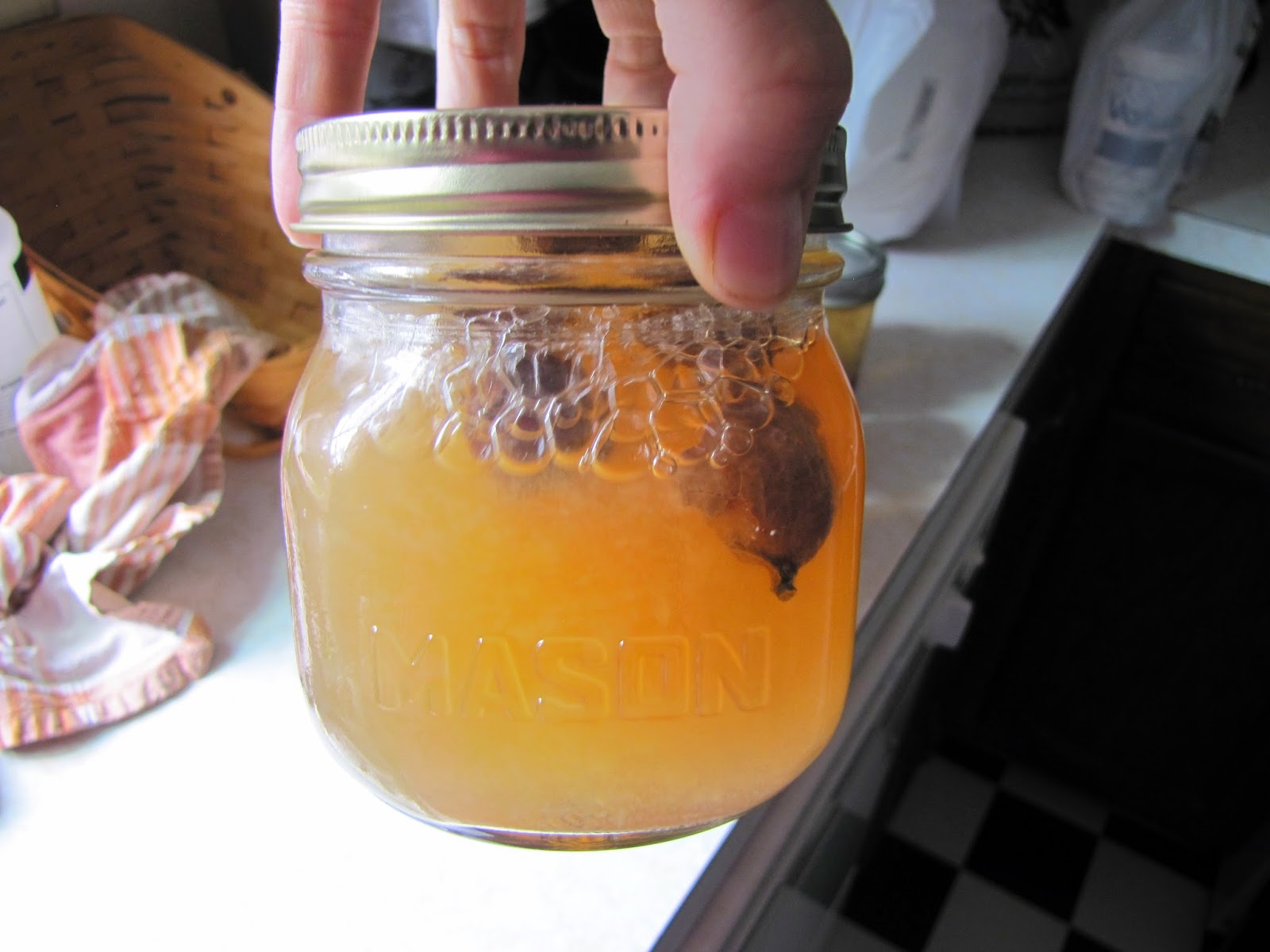


*I use approximately 1/4 cup liquid per load of laundry.
*The soap itself is nearly scentless. If I had to describe the smell it would be slightly fruity, but none of it remains on the clothing. If you like scented laundry soap you could add a few drops of essential oil to the liquid after you open the jar.
*I have not had any issues with staining clothing, but when I do a load of whites I make sure to add the liquid to the water instead of just throwing it directly on the clothing.
*I use vinegar as a fabric softener and have not had any issues with it combined with the soap nut liquid.
*If I open a jar and am not going to use it within a few days I will put it in the fridge. I'm not quite sure how long it would last in there before spoiling, but I've used some after a week and it was fine.
If you're looking for a cheap, environmentally-friendly, and gentle cleanser I would definitely try out soap nuts! My next experiment will be using the liquid as a shampoo. I'll be sure to share how it goes.
God bless!
Jessica
Soap nuts are actually berries that grow on trees native to India and Nepal. These berries contain saponins, making them a wonderful, natural cleanser for everything from laundry to dishes to even personal care.
 |
| Soap nut suds for the dishes |
Soap nuts are also an extremely environmentally-friendly soap option because the trees they grow on do not need to be sprayed with pesticides. The berries are naturally pest-resistant. The soap does not contaminate water and the nuts can be composted after use. It doesn't get much better than that!
 |
| The annoying little laundry bag |
The most common way to use soap nuts in your laundry is to crack open a few, place them in a cloth bag, and toss them in with your laundry. I have found that using them this way in my laundry creates several problems - it can be annoying to find the little baggie in the clean load of laundry and it can be difficult to determine whether or not your nuts are still creating suds. Each nut should last through at least three loads of laundry, but I have found that their length of use is dependent on which cycle you are using on your machine. Cloth diapers, for example, typically have an extra rinse, so if I do not fish the baggie out between the wash and rinse cycles the nuts will be exposed to water again and lose more of their strength.
To fix these issues I decided to make my own concentrated soap nut liquid. But this liquid can spoil, so I had to figure out a way to preserve it. Many people freeze their liquid in ice cube trays and throw a few in each load, but with limited freezer space in my house (and a slight canning addiction) I figured canning would be a better option.
Here's how I do it:
I use smaller jars - pints or half-pints - since the liquid can spoil. Each half-pint will get me about three loads worth of soap, so with a family of six that cloth diapers I can easily use that up before it spoils. I place 2-4 cracked nuts in the bottom of each jar.
Next I fill the jars with water.
Process in the pressure canner for 15 minutes on 10 psi or the water bath for 30 minutes and you have your liquid soap.
It's that easy!
When I open a new jar I strain it into a different jar and then throw the cooked nuts into the compost.
A few things to note about the soap:
*I use approximately 1/4 cup liquid per load of laundry.
*The soap itself is nearly scentless. If I had to describe the smell it would be slightly fruity, but none of it remains on the clothing. If you like scented laundry soap you could add a few drops of essential oil to the liquid after you open the jar.
*I have not had any issues with staining clothing, but when I do a load of whites I make sure to add the liquid to the water instead of just throwing it directly on the clothing.
*I use vinegar as a fabric softener and have not had any issues with it combined with the soap nut liquid.
*If I open a jar and am not going to use it within a few days I will put it in the fridge. I'm not quite sure how long it would last in there before spoiling, but I've used some after a week and it was fine.
 |
| The laundry cabinet |
If you're looking for a cheap, environmentally-friendly, and gentle cleanser I would definitely try out soap nuts! My next experiment will be using the liquid as a shampoo. I'll be sure to share how it goes.
God bless!
Jessica
Wednesday, April 23, 2014
In Defense of Home Canning

In a perfect world we would all eat 100% live food all of the time. Everything would be raw and free from bacteria that make us sick. Fruits and veggies would be abundant every season of the year and wild game (that isn't feeding of off GMO crops) would be right outside of our back door for us to consume whenever we need it.
Obviously, we do not live in a perfect world. Food-borne illness exists. Seasons change, making it impossible to grow fruits and veggies at times. Modernization and industrialization have changed our environment and the way we have to grow and preserve food.
Our ancestors had many different ways to deal with these problems. Some of them were nomadic and moved with the changing seasons so that fresh fruits and veggies would always be available no matter where they were. Others stayed put through the harsh winters and relied on traditional methods of preserving food in order to survive through "hibernation". Most of them, though, resigned to only eating what is in-season and available locally for them. If that means you only ate apples in the fall or berries in the spring, that's the way it had to be.
Thankfully, through time, new methods of food preservation have evolved and we're not forced to let the season determine our menus. While the tried and true methods of lacto-fermentation, smoking, and drying food will always be best, they are not always convenient or possible for everyone. Freezers and canning methods are the solution for those people. Some will look at these methods of preservation and say that because they are new and not what our ancestors used they are unhealthy, un"primal", or "processed", but I argue that just because it's new, it doesn't necessarily mean it's bad or evil. Not everything that is "processed" is the equivalent of a Twinkie, and in fact, the processing can make some foods even healthier for us to digest.
Why Preserve Food?
Environmental responsibility is just as important as the food we put into our bodies, mainly because it affects what we put into our bodies in the long-run. Because there are changing seasons, many areas of the world are unable to grow fresh produce for a large part of the year. In order to get their required nutrition, people living in these areas need to either preserve foods when they are in season or have fresh foods shipped to them from other parts of the world when they are out of season. Preserving the food while in season so it can be eaten throughout the year is the more environmentally responsible option. On top of that, it is better for your local economy, as you're supporting local farmers during their growing seasons by buying their products in bulk instead of supporting farmers overseas throughout the rest of the year.
Frozen or Canned
There are many people who are very anti-canned foods, because they feel canning leaves the food dead and denatured. These people will, however, rely on freezers to preserve their foods. While canning does create a sterile, dead food (void of both bad AND good bacteria), it does not mean the food is entirely denatured. My purpose in this post is to show you how and why.
I would also argue that while freezing is a wonderful method of preservation, it also, technically, creates processed food, and simply isn't practical for the average family to practice for ALL foods. In my family of six, it can take hundreds of quarts of canned applesauce from apple season in order to provide enough for us to eat just 2-3 times a week during the off-season. Just the applesauce alone would require an entire chest freezer for preservation. If you're a family that also buys your local, pastured meat in bulk, preserves many different varieties of foods other than applesauce, or perhaps has a breastfeeding infant that requires pumped milk, freezer space is precious and not readily available for bulk food preservation. A solution could be to buy multiple freezers, but once again, environmental responsibility is just as important as the food we consume. Freezers use a lot of energy.
While canning does create a sterile, dead food (void of living bacteria - both good and bad), it does not mean the food is entirely denatured. We have to make choices about how we preserve food based on the amount of space we have, what the heating process does to the specific food, and what is best for the environment.
What does the canning process do to the nutrients in food?
Studies have shown that there are both good and bad things that happen to the nutrients in foods that are canned. Vitamin C is lost during the canning process, but what little remains afterwards is stable throughout storage. The same for many of the B Vitamins. During the freezing process, on the other hand, very little of these nutrients are lost during blanching, but they are not stable during storage due to oxidation. Frozen produce consumed within a month is going to be more nutritious than if it was stored in the freezer for six months, whereas the nutrients in canned foods will remain stable throughout the shelf-life of the food. So a year after preservation, the canned food will usually be more nutrient dense than the frozen food, depending on moisture levels and the temperature of the freezer, of course.
On the other hand, the canning process opens up the cell walls of fruit flesh, making things like Vitamin A and carotenes more readily available. Very few of these nutrients are lost during the canning process, and in the case of things like tomatoes, the carotenes, like lycopene, will actually increase. Freezing produce, however, does not cause an increase in nutrients, with the exception of things like peaches where freezing yields 21 times more Vitamin C than fresh (canning yields only four times more than fresh - but the canned peaches have more Vitamin E than both frozen and fresh).
Fiber is another thing to consider when canning. The high heat does not affect fiber content, but rather makes it more soluble and useful to the body. Freezing does not do this.
The bottom line is this - both methods of preservation have their pros and cons. Canning creates a sterile, dead food that in some cases can be lower in nutrients, but it allows for more convenient storage and does not cause long-term nutrient loss. Freezing means less nutrient loss up front and leaves both good and bad bacteria intact, however it allows for more nutrient loss during the storage process due to oxidation. It also takes up more room in your freezer, and preservation of the food is dependent on access to electricity. If you've ever had a full freezer during a long-term power outage or have had a freezer door accidentally left open (like me), then you understand how inconvenient and costly this problem can be!
When to Can and When to Freeze?
Bone Broth
I've posted before about how I can my bone broths. There are many who think this is an unwise thing to do, as the high heat of the canning process can affect your gelatin. This is true - not all canned broth will gel afterwards. But, that doesn't mean that there is no benefit to canned broth.
When buying processed gelatin in the store, you can usually find two types - regular gelatin powder and collagen/gelatin hydrolysate. Gelatin powder is like the equivalent of uncanned bone broth reduced to a powder. It will gel and create things like gummy snacks. Collagen hydrolysate is like the equivalent of canned broth. It is heated at a higher temperature than regular gelatin powder, which increases the number of amino acids. While collagen hydrolysate will not gel, much like canned broth, it is better assimilated into the body. Collagen hydrolysate is actually better for people like me, with Crohn's Disease, as it is easier on digestion.
I see benefit to both freezing and canning bone broth. It is good to have some fresh off the stove or crockpot, some kept in your fridge for quick use, and some in either the freezer or canned for those times when you need it and don't have it fresh. Canned broth, since already heated, is perfect for things like soups and stews. Frozen is good for thawing and warming as a beverage.
Meat
Canning meat is one of the easiest things in the world to do. You simply take the raw meat, chop it into little pieces, fill the jar with water, and process in the pressure canner. When you are done you have a preserved jar of canned, pastured meat for those days when you may not have had time to thaw your meat before cooking or you need to take a meal with you somewhere.
Meat, unless you're eating it raw, is going to lose nutrition through preparation regardless of the method. Canning the meat brings it to a temperature of 240 degrees for a few hours and then allows all nutrients to remain stable throughout storage. You may end up cooking fresh or frozen meat at the same or higher temperature, losing the same nutrients. Canning will render the meat sterile, whereas cooked meat can quickly lead to food-borne illness if not handled and preserved properly after it is taken off of the heat.
For some meats, such as fish, the canning process will actually increase nutrition. The high heat causes bones in fish meat to leach calcium into the meat.
Vegetables
Let's face it, canned veggies often don't taste as good as fresh or frozen. Green beans, for example, can end up mushy. And the longer the jars sit in storage, the worse the flavor seems to be.
But some veggies, like leafy greens, actually benefit from the heat. Spinach that sits in your fridge can lose nearly all of its nutrient content in one week (that doesn't count the 2-3 weeks it can take for it to get to your fridge from the farm during winter). Cooked spinach increases iron, protein, fiber, zinc, thiamine, and calcium; and has higher amounts of vitamins A and E. Spinach that is picked ripe and canned immediately will have much more nutrition than store-bought spinach that you bring home and immediately use up, and way more than spinach that sits in your fridge for a week longer.
With any veggies, if you're worried about nutrient loss during the canning process, remember that most of what is lost ends up in the cooking liquid. Since canned veggies are only really good in cooked foods like stews or soups, it is best to use the liquid from your jars in the soups in order to increase nutrition and make up for what was lost in the veggie itself.
A 2005 Dutch study suggested that canning fruits and vegetables decreases glucosinolate content - a phytochemical that may fight cancer and memory loss. Glucosinolates are primarily found in cruciferous veggies like cabbage or broccoli. Since broccoli is high in Vitamin C, it is not recommended that you can for preservation. And cabbage is best preserved through lacto-fermentation as sauerkraut. To benefit from the protection of glucosinolates, just preserve the foods high in them with other methods and serve them as a side with your home-canned foods that lack them.
Fruits
As is the case with broccoli, it is best not to can fruits that are high in Vitamin C.
Some people have luck canning pumpkin, although I have never tried. Canned pumpkin has 30 times more vitamin A than raw pumpkin and 20 times more than fresh-cooked.
Other fruits, such as apples, provide fiber as their benefit. Since the canning process does not affect fiber, and actually enables better digestion, apples are one fruit that is best preserved through canning. You could argue that it would be best to freeze applesauce, as not to make it a dead food, but the heating process used to create the applesauce itself has already rendered it dead. Freezing will not make it live again. Canning will free up freezer space for items that cannot be preserved through canning, such as squash and citrus fruit, and allow you to buy apples in bulk during the growing season.
Fruits such as berries are best when frozen if you're looking to consume them for nutrition, but since they aren't a main source of vitamin C to begin with, canning will not make much of a difference. It is nice to have some frozen berries to enjoy in things like smoothies for a nutrient punch, with some canned berry jams in the cupboards to use as condiments and for flavor.
As mentioned above, always can your tomatoes instead of freezing, as the process increases the amount of lycopene in the fruit.
Conclusion
All food methods have benefits. When you're looking at 15 bushels of fresh apples, it would be impossible to freeze it all. Dehydrate some into chips. Freeze some for baking. Can some applesauce.
When you get your full beef you can dehydrate or smoke some for jerky. Can some for a convenient meal later. Freeze the rest to enjoy throughout the year.
Unfortunately, we can't always forage and hunt for the freshest of foods. We have to make sacrifices in order to be able to live in the modern world. Raw, live foods are rare and when they are plentiful, they are rarely safe when eaten raw. Even most of the "raw" almonds you find in the store are irradiated and left dead. It's the unfortunate consequence of desiring almonds when you don't live in almond country. In order for to food to get to our doors year-round, whenever we're craving them, they have to be made safe for transport. The same will be true when you're desiring berries in the winter or bananas in the North.
Don't let your fear of eating "dead" foods (in moderation) keep you from enjoying the art of canning your own delicious foods. Yes, a raw egg is best for you nutritionally, but you will still eat it when it is cooked and dead, won't you? Just because a food is canned, it doesn't mean it's not good for you.
As with any meal, it's always good to eat more live than dead foods and no one is advocating a diet consisting solely of home-canned foods. If you decide to have some of your canned applesauce with a meal, make sure that you add some homemade yogurt or large portions of raw veggies to the meal. If you're eating canned meat, top it with a fermented cruciferous veggie, like homemade sauerkraut. If you're enjoying some of your homemade unsweetened berry jam with a meal, add raw, local honey to it before serving to "liven" it up. Balancing dead foods with live ones will create a healthy, nutritious meal that is also environmentally-friendly and supports local farmers year-round.
A jar of in-season, home-canned produce is going to be more nutritious than out of season produce at the grocery store, and also better for the environment. Period. You also can't downplay the security in knowing that the organic, local food you worked so hard to preserve will be stable regardless of whatever happens to the power.
Finally, remember that whenever you're canning, always use proper sanitation and hygiene guidelines. Use lids that are free of BPA and other toxins, and always make sure to dispose of any jars that show signs of seepage or spoilage.
-Jessica
Sources
http://ucce.ucdavis.edu/files/datastore/234-779.pdf
http://nutrican.fshn.uiuc.edu/studyfinal.html
Monday, January 27, 2014
Homemade Liver Powder
I struggle with anemia. Between my Crohn's Disease and having been pregnant and/or nursing for over seven consecutive years, my iron levels can get pretty low. While pregnant I always experience a dip in my hemoglobin levels in the beginning of the third trimester, where I test around 8.0 (normal range for women is between 12.0-15.5 and slightly lower at 11.0 during pregnancy). I've also had flare-ups of Crohn's Disease in which my anemia is so bad that they were considering blood transfusions.
Because of this problem, I've had to find ways to deal with my anemia through diet. Traditional iron supplementation is not a good solution, as most iron supplements can make constipation even worse during pregnancy and are typically made up on non-heme iron that does not absorb well at all. And if you have a child who is suffering from anemia, supplements can be dangerous because children often overdose on iron. It really is best to focus on getting your iron through your diet and also making sure you aren't eating foods that leach the iron from your system or inhibit its absorption.
There are two forms of dietary iron - heme and non-heme. Heme iron comes from animal-based sources that are full of hemoglobin, such as meat and fish. Non-heme iron comes from plant-based sources like beans and fortified grains and is not absorbed as well into the body. In fact, the reason that grains are fortified with things like iron is because the food itself, when improperly prepared, can actually leach iron from your body.
Besides avoiding grains and improperly prepared beans and legumes, when I'm dealing with anemia I also avoid black tea, which is full of tannins that decrease iron absorption (lighter teas, like white and green do not seem to have the same effect). I also make sure not to eat any dairy or other calcium-rich food with my iron-rich foods. Just making those small changes to my diet has increased my hemoglobin score four points in one month during pregnancy, without having to take an iron supplement.
I obviously also try to increase my heme iron intake. During pregnancy, I follow a form of the Brewer Diet and try to eat iron-rich organ meat at least once a week, usually in the form of pastured beef liver. The problem with this is that there are times during pregnancy where nausea makes stomaching the very potent smell and taste of the liver nearly impossible. Because of this, it helps to get creative with your liver consumption. One way to do that is to freeze your liver in small chunks and swallow them whole like a pill throughout the day. If you're like me and have a strong gag reflex during pregnancy, that may not be the best solution.
Making your own iron pills is easy and a great solution to this problem. People often use this process after pregnancy to encapsulate their placenta - dehydrate the meat, grind it down into a powder, and fill your empty gelatin capsules.
Here is how I did it with pastured beef liver (remember to only use pastured beef liver that is from a reputable source). First, I cut the liver into thin strips, placed it on a cookie sheet, and baked it in the oven on the lowest setting possible (170) for approximately ten hours. You do NOT want to put the iron in your dehydrator inside of the house, because the smell will be horrible and will take a really long time to air out. Having it in the oven is also pretty noxious, but not nearly as bad as it would be in the dehydrator. Within 24 hours the smell was gone in my kitchen when I dried it out in the oven.
Once your liver is dry, put it in the food processor until it is ground into a fine powder:

Next, take empty gelatin capsules and fill them with the powder. For mine, I used these:

I was making these for my six-year-old son, who has a hard time with swallowing bigger pills. If you're making these for an adult, you may want to use a larger size capsule. These #3 capsules only hold up to 360 mg of the powder, while the 00 size can hold up to 1092 mg.
To fill them you just dump all of your powder into a bowl, take apart the capsule, scoop the powder into both ends and then put the capsule back together. So simple!


If you're like me and you battle anemia, you can feel it coming on. Whenever you're feeling a little run-down and irritable, just pop a handful of the capsules and let the liver do its magic. Remember to store your pills in the fridge.
You can also skip the encapsulation step and use your powder in other ways - put some in your meatloaf or burger patties for an extra iron punch, or in any other casserole that will hide the liver flavor well.

I add a tablespoon to my smoothies. 1 Tablespoon liver powder, 2 cups of homemade raw yogurt, 1 tablespoon of raw local honey, 1 tablespoon homemade nut butter, some raw spinach, and a cup of frozen fruit - talk about a superfood with all of the nutrients, probiotics, digestive healing, and allergy help!

My kids usually do well with eating cooked liver, but a smoothie is one way to get a picky child to consume it without a fight and to make it feel like a treat!

-Jessica
Because of this problem, I've had to find ways to deal with my anemia through diet. Traditional iron supplementation is not a good solution, as most iron supplements can make constipation even worse during pregnancy and are typically made up on non-heme iron that does not absorb well at all. And if you have a child who is suffering from anemia, supplements can be dangerous because children often overdose on iron. It really is best to focus on getting your iron through your diet and also making sure you aren't eating foods that leach the iron from your system or inhibit its absorption.
There are two forms of dietary iron - heme and non-heme. Heme iron comes from animal-based sources that are full of hemoglobin, such as meat and fish. Non-heme iron comes from plant-based sources like beans and fortified grains and is not absorbed as well into the body. In fact, the reason that grains are fortified with things like iron is because the food itself, when improperly prepared, can actually leach iron from your body.
Besides avoiding grains and improperly prepared beans and legumes, when I'm dealing with anemia I also avoid black tea, which is full of tannins that decrease iron absorption (lighter teas, like white and green do not seem to have the same effect). I also make sure not to eat any dairy or other calcium-rich food with my iron-rich foods. Just making those small changes to my diet has increased my hemoglobin score four points in one month during pregnancy, without having to take an iron supplement.
I obviously also try to increase my heme iron intake. During pregnancy, I follow a form of the Brewer Diet and try to eat iron-rich organ meat at least once a week, usually in the form of pastured beef liver. The problem with this is that there are times during pregnancy where nausea makes stomaching the very potent smell and taste of the liver nearly impossible. Because of this, it helps to get creative with your liver consumption. One way to do that is to freeze your liver in small chunks and swallow them whole like a pill throughout the day. If you're like me and have a strong gag reflex during pregnancy, that may not be the best solution.
Making your own iron pills is easy and a great solution to this problem. People often use this process after pregnancy to encapsulate their placenta - dehydrate the meat, grind it down into a powder, and fill your empty gelatin capsules.
Here is how I did it with pastured beef liver (remember to only use pastured beef liver that is from a reputable source). First, I cut the liver into thin strips, placed it on a cookie sheet, and baked it in the oven on the lowest setting possible (170) for approximately ten hours. You do NOT want to put the iron in your dehydrator inside of the house, because the smell will be horrible and will take a really long time to air out. Having it in the oven is also pretty noxious, but not nearly as bad as it would be in the dehydrator. Within 24 hours the smell was gone in my kitchen when I dried it out in the oven.
Once your liver is dry, put it in the food processor until it is ground into a fine powder:
Next, take empty gelatin capsules and fill them with the powder. For mine, I used these:
I was making these for my six-year-old son, who has a hard time with swallowing bigger pills. If you're making these for an adult, you may want to use a larger size capsule. These #3 capsules only hold up to 360 mg of the powder, while the 00 size can hold up to 1092 mg.
To fill them you just dump all of your powder into a bowl, take apart the capsule, scoop the powder into both ends and then put the capsule back together. So simple!
If you're like me and you battle anemia, you can feel it coming on. Whenever you're feeling a little run-down and irritable, just pop a handful of the capsules and let the liver do its magic. Remember to store your pills in the fridge.
You can also skip the encapsulation step and use your powder in other ways - put some in your meatloaf or burger patties for an extra iron punch, or in any other casserole that will hide the liver flavor well.
I add a tablespoon to my smoothies. 1 Tablespoon liver powder, 2 cups of homemade raw yogurt, 1 tablespoon of raw local honey, 1 tablespoon homemade nut butter, some raw spinach, and a cup of frozen fruit - talk about a superfood with all of the nutrients, probiotics, digestive healing, and allergy help!
My kids usually do well with eating cooked liver, but a smoothie is one way to get a picky child to consume it without a fight and to make it feel like a treat!
-Jessica
Sunday, January 5, 2014
SCD/GAPS/Paleo: The Plan
To follow-up from my last post, I thought I would share a little more about the actual diet. The theory is that certain individuals have what's called a leaky gut - intestinal or bowel
hyperpermeability. Essentially, in these people the lining of their
intestinal tract contains holes resulting from things like poor diet,
infections, medications, and toxin exposure. When these people eat
food, particles of the food, toxins, and other molecules can break the
barrier of the intestinal wall and end up in their bloodstream, causing
an immune system reaction. For me the reaction is Crohn's Disease
and for my son it is allergies (rashes, itching, and in the case of
major exposure, anaphylaxis).
The digestive system is filled with over 100 trillion microorganisms (gut flora), some good and some bad. People with a leaky gut have an overgrowth of the bad bacteria and are deficient in good bacteria. I have had testing done to confirm that this is the case with my body and am assuming the same is true for my son. We aren't sure how this happened with him, as he seems to have been born with his allergies, but our theory is that the megadoses of antibiotics and steroids that he was exposed to in utero and shortly after birth through breastmilk may have something to do with it. Scientists don't really know why this happens.
Bad bacteria in your gut feed off of sugar and carbohydrates. By altering the nutrition that we take into our bodies, we can stop feeding the bad bacteria so it dies off, and allow for the good bacteria to take over. Once you have the proper balance of bacteria, the gut can be healed and proper digestive/immune responses occur. This is the goal of this diet, which is outlined here:
The digestive system is filled with over 100 trillion microorganisms (gut flora), some good and some bad. People with a leaky gut have an overgrowth of the bad bacteria and are deficient in good bacteria. I have had testing done to confirm that this is the case with my body and am assuming the same is true for my son. We aren't sure how this happened with him, as he seems to have been born with his allergies, but our theory is that the megadoses of antibiotics and steroids that he was exposed to in utero and shortly after birth through breastmilk may have something to do with it. Scientists don't really know why this happens.
Bad bacteria in your gut feed off of sugar and carbohydrates. By altering the nutrition that we take into our bodies, we can stop feeding the bad bacteria so it dies off, and allow for the good bacteria to take over. Once you have the proper balance of bacteria, the gut can be healed and proper digestive/immune responses occur. This is the goal of this diet, which is outlined here:
What We Can Eat
Meat - all antibiotic and hormone-free beef, lamb, pork, poultry, and fish
Eggs - antibiotic and hormone-free
Dairy - homemade raw milk yogurt, natural cheeses - made from antibiotic and hormone-free milk
Veggies - fresh and frozen organic vegetables; home-canned vegetables; artichoke, asparagus, beets, broccoli, Brussels sprouts, cabbage, cauliflower, carrots, celery, lettuce, Lima beans, mushrooms, onions, parsley, pumpkin, spinach, string beans, turnips, cucumbers, eggplant, garlic, kale, peas, squash, tomatoes, watercress
Beans - only properly soaked; navy beans, lentils, split peas
Fruit - fresh, dried and frozen organic; avocados, apricots, bananas (ripe only), berries, cherries, coconut, dates, raisins, grapefruit, kiwi, lemons, melons, nectarines, peaches, pineapple, rhubarb, grapes, kumquats, limes, mangoes, oranges, papaya, prunes, tangerines; apples and pears only from farmers who you know have not sprayed with antibiotics
Nuts - only properly soaked; almonds, pecans, Brazil nuts, hazel nuts, walnuts, cashews, boiled chestnuts; nut flour
Juice - organic and watered-down tomato juice, orange juice, pineapple juice, grapefruit juice, grape juice, apple cider
Weak tea
Honey
Oils - olive oil and coconut oil
Others - mustard, unflavored gelatin, vinegar, spices, baking soda, unsweetened chocolate
Alcohol - dry wine, gin, Scotch, bourbon, and vodka
What We Can't Eat
Meat - processed meat (bacon, hot dogs, lunch meat, etc.), smoked meat, canned meat
Dairy - processed cheese, cottage cheese, cream, feta, mozzarella, primost, gjetost, ricotta, store-bought yogurt, buttermilk, sour cream
Veggies - commercially canned; corn, white and sweet potatoes, yams, parsnips, okra, sea weed
Beans - chick peas (no hummus), bean sprouts, soybeans, mung beans, fava beans, garbanzo beans; no bean or lentil flour Grains - all, including oats and rice
Fruit - canned, dried with sulfites, banana chips
Nuts - peanuts or salted nuts of any kind
Seeds - none are allowed
Juice - canned tomato products, apple juice, juice boxes
Oils - margarine, soybean oil, canola oil, corn oil, vegetable oil
Other - cornstarch, arrowroot starch, tapioca starch, sago starch, carob, agar-agar, carrageenan, pectin, baking powder Sweeteners - sugar, molasses, corn syrup, maple syrup, artificial sweeteners, sucrose, lactose
Alcohol - beer, sherry, cordials, brandy
Here is what the last 24 hours of eating looked like for me:
Breakfast - two pastured eggs scrambled and served over a bed of spinach and raw milk cheddar cheese; hot tea; a few bites of raw milk yogurt
Snack - pastured beef gelatin (made with orange, pineapple, and cranberry juices)
Lunch - bowl of split pea soup (made with soaked green split peas, homemade beef broth, green beans, pastured beef, garlic, onion, and peas); hot tea
Snack - raisins and sprouted almonds
Snack - grape tomatoes and goat cheese
Dinner - pastured ground beef browned and mixed with BPA-free tomato paste, served over zucchini noodles; baked broccoli (made with olive oil and sea salt)
Snack - slice of cheese
Here is what the last 24 hours of eating looked like for my son (dairy-free):
Breakfast - two pastured eggs scrambled; two almond cookies (made from freshly ground sprouted almonds, cashew butter, honey, eggs, and homemade vanilla extract) covered in home-canned cranberry sauce and drizzled with honey; over-ripe banana
Snack - raisins
Lunch - bowl of split pea soup (made with soaked
green split peas, homemade beef broth, green beans, pastured
beef, garlic, onion, and peas)
Snack - bowl of sprouted almonds
Snack - bowl of pastured beef gelatin (made with orange, pineapple, and cranberry juices)
Dinner - pastured ground beef browned and mixed with BPA-free tomato paste, served over zucchini noodles; baked broccoli (made with olive oil and sea salt); hot tea
Dessert - one almond cookie
As you can see, there is no shortage of delicious food options. It took some getting used to, but once our taste buds adjusted to not being overloaded with sweets, we learned to find pleasure in simple things, like a piece of raw fruit or a tiny amount of honey.
-Jessica
Saturday, January 4, 2014
SCD/GAPS/Paleo Diet: The First Three Months
On October 1 my six-year-old son and I began our own version of the Specific Carbohydrate Diet/GAPS Diet/Paleo eating plan. We made the decision to do it for a few reasons. First, I have Crohn's Disease and over the course of the last five years have been able to wean myself down to the minimum dosage of my maintenance medication, but have never felt completely comfortable with quitting it cold-turkey because I've been either pregnant or nursing at the time. I'm currently nursing a ten-month-old, but feel like it's a good time to try to go off the medication before another potential pregnancy.
The reason we decided to have my son do it is because he is allergic to peanuts and dairy. He turned six years old last August and while he has outgrown many other food allergies over the last few years (eggs, soy, pineapple, and tomato), these two allergies have actually gotten worse according to test results. My son nursed as a baby and never had a reaction to what I ate and was in my milk. He even received pumped milk up to the age of nearly three without reactions to what was in the milk, but when I tried to give him some of my pumped milk for an added probiotic boost last year he reacted to it. Even after avoiding dairy and peanuts for several weeks and trying again, he still had a reaction. Because of this and the fact that very few children outgrow their allergies if they haven't already by Kindergarten age, we knew that it was going to take something drastic, combined with a lot of prayer, to heal his body. Others have had luck with food allergies on the GAPS diet, so we thought we would give it a shot. At this point we have nothing to lose.
I'd had Breaking the Vicious Cycle, the book about the SCD diet, sitting on my bookshelf for years and had been ignoring it despite having people in my life tell me I should try it. It wasn't until a friend told me about her experience with her autistic son and the GAPS diet and then hearing about another woman at a Weston A. Price meeting who had "cured" her Crohn's Disease with the same diet, that I decided I needed to look into it.
The SCD, GAPS and Paleo diets are all very similar. You avoid all grains (not just gluten), including things like rice, oats, quinoa, potatoes, and other foods that people with gluten intolerances can eat. No sugar, preservatives, or other food additives are allowed. Basically, you can eat pastured meats, pastured eggs, raw dairy, organic fruits/vegetables, properly soaked nuts (and nut flours and butters), lentils, split peas, navy beans, honey, oils (we only eat coconut and olive), and a few other things. All of the diets vary a little in what they will and won't allow, but the point is the same - no grains and sugar, a therapeutic probiotic regimen, and clean eating so that your "leaky gut" can heal.
Preparing for the Diet
We spent the month of September preparing for the diet. Since we are already dealing with food allergies, intolerances, and special diets in our home, going on such an intense diet wasn't nearly as scary as it would be for most people. We haven't been able to eat at restaurants or eat processed foods for years now, so we didn't have to worry about adjusting our lifestyles to eat this way. We also already had sources for many of the foods on the plan, like pastured eggs/meat and raw dairy. We have basically been eating this way for years without completely cutting out sugar and grains, so that was going to be the hard part for us. For others who have to completely change the way they look at food, this process would seem much more overwhelming and difficult.
I also think that this diet would be very difficult for the average child. Most of the foods that children enjoy (and that are convenient for parents to feed them), such as breaded chicken nuggets, breads, cookies, crackers, french fries, candy, macaroni and cheese, etc. are not allowed on the diet. We didn't have to deal with a child that was being forced to give up the foods he liked, because our son has never been able to enjoy many of those foods due to his food allergies. He is used to not being allowed to eat what other people around him are enjoying.
There were some foods that were hard for my son to give up, mainly some of his favorite sugary treats. For me it was sourdough bread, bacon, and homemade pancakes with maple syrup. Eventually, we both weaned off of our grain and sugar addictions and I learned how to cook "legal" options that would replace them using nut flours and honey. We used the month of September to wean ourselves off of those foods and for me to refine my skills in cooking with our new staples.
Starting the Diet
On October 1, 2013 we officially began. We followed the GAPS protocol and for the first week we ate nothing but homemade bone broth to allow our digestive systems to heal. On top of this, my son started a new therapeutic dose of probiotics (I was already on a therapeutic dose). He went from taking 12 strains at 3 billion to 12 strains at 10 billion and I continued at 12 strains at 20 billion.
The first week was terrible. We both experienced very severe-die off reactions as our bodies purged the bad bacteria. By the second night we were both waking through the night and vomiting. This lasted about five days before we finally felt better.
I experienced a slight dip in my milk supply during the first few days, so I began eating homemade raw milk yogurt by day three. Since my son cannot have dairy, he was simply on the bone broths. Our next food we introduced was cooked vegetables in the broth and homemade sauerkraut, followed by egg yolks and cooked meats. By week three we were eating nut flours made from nuts that I had properly soaked and dehydrated, along with cooked fruits. The very last things we added were raw fruit and soaked lentils, split peas, and navy beans after the end of the first month.
Six weeks into the diet we were both feeling great and decided to up our probiotic dosage again. My son began taking 12 strains at 13 billion and I upped it to 12 strains at 23 billion. We did not experience a severe die-off the second time.
At the two month mark I hadn't taken my maintenance medication for my Crohn's Disease and was experiencing zero symptoms. In fact, my body was having the opposite reaction and I became very constipated and was only having a bowel movement once a week. Three months out and I'm still having problems with this issue. For years with my Crohn's Disease I have had to avoid trigger foods that would cause symptoms to flare, such as raw peppers, lentils, onions, or broccoli to name a few. I have learned that cutting out the fiber from all grains and then still avoiding those trigger foods makes digestion very difficult. I've had to change the way I eat and allow myself to consume small amounts of the trigger foods in order to stay "regular". It has been wonderful to enjoy a bowl of split pea soup or some raw peppers after avoiding them for nearly a decade.
The Results at Three Months
After three months I feel amazing. My nursing baby still wakes three times a night to eat and with previous babies I was feeling very run-down and could feel my immune system crashing and the Crohn's symptoms beginning to flare by this point. I feel like the diet has given me a tremendous amount of energy and I feel so healthy that the sleep-deprivation isn't as much of an issue. I imagine that I would feel like a million dollars if I were also getting solid sleep on top of this diet.
The effects of the diet on my son have also been amazing. After that first week of die-off he began having formed stools for the very first time in his life. His digestion is now very regular and solid. Another amazing result has been his weight gain. You would think that by cutting out nearly half of the foods he can eat, he would lose a lot of weight (which has been the case for me simply because I'm eating and craving less - I've lost all of my baby weight and then some, a total of 20 pounds in three months), however, he has had the opposite reaction. My son has always been extremely tiny, under the tenth percentile on the growth chart for weight most of the time. At age six he weighed 38 pounds, which was the same weight he had been for over a year. He lost two pounds during the first six weeks of the diet, but right before Christmas he was weighed again and had gained that two back plus another three pounds. Cutting out half of his diet and eating much more nutrient-dense food has resulted in a five pound weight gain after over a year and a half of no growth. This proves to me that his body is now absorbing more of the food he is eating and his digestion is getting more efficient. Since the goal of the diet is to heal the gaps in the intestinal wall, I have faith that this is a sign that something is happening there!
I plan to write more here about our journey, which will last at least two years, and also share some of our favorite recipes and tips for surviving this diet. If you or a family member are suffering from an autoimmune disease, food allergy/intolerance, or other ailment in which traditional medicine is failing you or giving you few options for full healing, this is something that may be an option for you. I won't lie, this diet is extreme and you have to follow it fanatically in order to see any benefit, but there are countless testimonies from people who have done it and have had great outcomes.
-Jessica
The reason we decided to have my son do it is because he is allergic to peanuts and dairy. He turned six years old last August and while he has outgrown many other food allergies over the last few years (eggs, soy, pineapple, and tomato), these two allergies have actually gotten worse according to test results. My son nursed as a baby and never had a reaction to what I ate and was in my milk. He even received pumped milk up to the age of nearly three without reactions to what was in the milk, but when I tried to give him some of my pumped milk for an added probiotic boost last year he reacted to it. Even after avoiding dairy and peanuts for several weeks and trying again, he still had a reaction. Because of this and the fact that very few children outgrow their allergies if they haven't already by Kindergarten age, we knew that it was going to take something drastic, combined with a lot of prayer, to heal his body. Others have had luck with food allergies on the GAPS diet, so we thought we would give it a shot. At this point we have nothing to lose.
I'd had Breaking the Vicious Cycle, the book about the SCD diet, sitting on my bookshelf for years and had been ignoring it despite having people in my life tell me I should try it. It wasn't until a friend told me about her experience with her autistic son and the GAPS diet and then hearing about another woman at a Weston A. Price meeting who had "cured" her Crohn's Disease with the same diet, that I decided I needed to look into it.
The SCD, GAPS and Paleo diets are all very similar. You avoid all grains (not just gluten), including things like rice, oats, quinoa, potatoes, and other foods that people with gluten intolerances can eat. No sugar, preservatives, or other food additives are allowed. Basically, you can eat pastured meats, pastured eggs, raw dairy, organic fruits/vegetables, properly soaked nuts (and nut flours and butters), lentils, split peas, navy beans, honey, oils (we only eat coconut and olive), and a few other things. All of the diets vary a little in what they will and won't allow, but the point is the same - no grains and sugar, a therapeutic probiotic regimen, and clean eating so that your "leaky gut" can heal.
Preparing for the Diet
We spent the month of September preparing for the diet. Since we are already dealing with food allergies, intolerances, and special diets in our home, going on such an intense diet wasn't nearly as scary as it would be for most people. We haven't been able to eat at restaurants or eat processed foods for years now, so we didn't have to worry about adjusting our lifestyles to eat this way. We also already had sources for many of the foods on the plan, like pastured eggs/meat and raw dairy. We have basically been eating this way for years without completely cutting out sugar and grains, so that was going to be the hard part for us. For others who have to completely change the way they look at food, this process would seem much more overwhelming and difficult.
I also think that this diet would be very difficult for the average child. Most of the foods that children enjoy (and that are convenient for parents to feed them), such as breaded chicken nuggets, breads, cookies, crackers, french fries, candy, macaroni and cheese, etc. are not allowed on the diet. We didn't have to deal with a child that was being forced to give up the foods he liked, because our son has never been able to enjoy many of those foods due to his food allergies. He is used to not being allowed to eat what other people around him are enjoying.
There were some foods that were hard for my son to give up, mainly some of his favorite sugary treats. For me it was sourdough bread, bacon, and homemade pancakes with maple syrup. Eventually, we both weaned off of our grain and sugar addictions and I learned how to cook "legal" options that would replace them using nut flours and honey. We used the month of September to wean ourselves off of those foods and for me to refine my skills in cooking with our new staples.
Starting the Diet
On October 1, 2013 we officially began. We followed the GAPS protocol and for the first week we ate nothing but homemade bone broth to allow our digestive systems to heal. On top of this, my son started a new therapeutic dose of probiotics (I was already on a therapeutic dose). He went from taking 12 strains at 3 billion to 12 strains at 10 billion and I continued at 12 strains at 20 billion.
The first week was terrible. We both experienced very severe-die off reactions as our bodies purged the bad bacteria. By the second night we were both waking through the night and vomiting. This lasted about five days before we finally felt better.
I experienced a slight dip in my milk supply during the first few days, so I began eating homemade raw milk yogurt by day three. Since my son cannot have dairy, he was simply on the bone broths. Our next food we introduced was cooked vegetables in the broth and homemade sauerkraut, followed by egg yolks and cooked meats. By week three we were eating nut flours made from nuts that I had properly soaked and dehydrated, along with cooked fruits. The very last things we added were raw fruit and soaked lentils, split peas, and navy beans after the end of the first month.
Six weeks into the diet we were both feeling great and decided to up our probiotic dosage again. My son began taking 12 strains at 13 billion and I upped it to 12 strains at 23 billion. We did not experience a severe die-off the second time.
At the two month mark I hadn't taken my maintenance medication for my Crohn's Disease and was experiencing zero symptoms. In fact, my body was having the opposite reaction and I became very constipated and was only having a bowel movement once a week. Three months out and I'm still having problems with this issue. For years with my Crohn's Disease I have had to avoid trigger foods that would cause symptoms to flare, such as raw peppers, lentils, onions, or broccoli to name a few. I have learned that cutting out the fiber from all grains and then still avoiding those trigger foods makes digestion very difficult. I've had to change the way I eat and allow myself to consume small amounts of the trigger foods in order to stay "regular". It has been wonderful to enjoy a bowl of split pea soup or some raw peppers after avoiding them for nearly a decade.
The Results at Three Months
After three months I feel amazing. My nursing baby still wakes three times a night to eat and with previous babies I was feeling very run-down and could feel my immune system crashing and the Crohn's symptoms beginning to flare by this point. I feel like the diet has given me a tremendous amount of energy and I feel so healthy that the sleep-deprivation isn't as much of an issue. I imagine that I would feel like a million dollars if I were also getting solid sleep on top of this diet.
The effects of the diet on my son have also been amazing. After that first week of die-off he began having formed stools for the very first time in his life. His digestion is now very regular and solid. Another amazing result has been his weight gain. You would think that by cutting out nearly half of the foods he can eat, he would lose a lot of weight (which has been the case for me simply because I'm eating and craving less - I've lost all of my baby weight and then some, a total of 20 pounds in three months), however, he has had the opposite reaction. My son has always been extremely tiny, under the tenth percentile on the growth chart for weight most of the time. At age six he weighed 38 pounds, which was the same weight he had been for over a year. He lost two pounds during the first six weeks of the diet, but right before Christmas he was weighed again and had gained that two back plus another three pounds. Cutting out half of his diet and eating much more nutrient-dense food has resulted in a five pound weight gain after over a year and a half of no growth. This proves to me that his body is now absorbing more of the food he is eating and his digestion is getting more efficient. Since the goal of the diet is to heal the gaps in the intestinal wall, I have faith that this is a sign that something is happening there!
I plan to write more here about our journey, which will last at least two years, and also share some of our favorite recipes and tips for surviving this diet. If you or a family member are suffering from an autoimmune disease, food allergy/intolerance, or other ailment in which traditional medicine is failing you or giving you few options for full healing, this is something that may be an option for you. I won't lie, this diet is extreme and you have to follow it fanatically in order to see any benefit, but there are countless testimonies from people who have done it and have had great outcomes.
-Jessica
Monday, October 7, 2013
Preserving Winter Squash
We're nearing the end of my squash preserving frenzy and I thought I would share some tips on how to store it so that you will have plenty of your favorite locally-grown squash to enjoy through the winter and spring months.
Winter squash is high in carotenoids and antioxidants, and has anti-inflammatory, anti-diabetic, and insulin-regulating properties. It's packed with Vitamin A and research is showing that it may play a role in cancer prevention.
It is extremely important that you only consume organic winter squash because it can pull contaminants out of the soil. If you find a good source for locally-grown organic squash, make sure to stock up on it and start preserving.
The wonderful thing about squash is that it can last 3-6 months before rotting if stored properly (temperature controlled). If you plan to keep your squash whole after harvest, make sure not to consume any that may end up bruised during storage, because once bruised they are susceptible to rot and bacterial growth.
Canning squash in chunks is possible with a pressure canner, but you are not supposed to can the puree due to its density. Of course, it is possible to can the puree, since it is sold that way in stores, but it is not something I would advise messing with at home, as the chance for food-borne illness is higher with dense foods like pumpkin.
If you have the freezer space, the best way to preserve squash is in puree form. It's extremely easy!
First, cook your squash. I prefer to just throw it whole into a stockpot full of water and let it simmer until cooked. If you want to soak and consume the seeds, you'll need to slice and scoop them out before cooking, as the heat will make them unsproutable. Then you can steam or bake your sliced squash.
Once cooked, slice the squash, scoop and toss the guts, and then throw the meat into your food processor, blending until it is the desired texture. Pureed squash is a wonderful staple to have on hand in your fridge, as it can be added to soups, grain-free baked goods, and casseroles for an added vitamin punch.
I prefer to freeze my squash in ice cube trays. One cube equals approximately two tablespoons, making it easy to add the desired amount of squash to recipes. If you were to freeze it in a large solid chunk, you would have to thaw and measure for future use. The ice cubes also make convenient baby food serving sizes. Just pull out 1-2 cubes the night before and in the morning you'll have thawed baby food ready to go. You can even throw them in a mesh feeder to give your teething baby some relief and nutrition at the same time.

Once your cubes freeze, transfer them to plastic baggies or whatever glass freezer storage system you like to use. It will last about a year in the freezer.
Squash seeds, if you are able to eat them, are a really nutrient-dense snack. They are high in unsaturated fat and protein, zinc, diverse forms of Vitamin E, and other anti-oxidants. Remember, if you are planning to consume any seeds, you must first soak them to break down the enzyme inhibitors and phytates that make them hard to digest. Just place your seeds in a container of water, add salt, and let it sit for at least seven hours before draining and dehydrating/cooking.
If you would like to sprout your pumpkin seeds to add even more nutrients to this already nutrient-dense food, drain them after the initial soaking, let them sit and then rinse/drain again every 8 hours until you see the sprouts forming. They will look like little white tails.

I prefer to dehydrate my pumpkin seeds in the oven. I lightly salt them and place them on a cookie sheet on the lowest setting my oven provides (170) for a few hours or until they are crispy.
So stop decorating with those delicious pumpkins, gourds and squash, and start eating and preserving them. Winter is just around the corner!
-Jessica
 |
| Squash Pancakes - Yum! |
Winter squash is high in carotenoids and antioxidants, and has anti-inflammatory, anti-diabetic, and insulin-regulating properties. It's packed with Vitamin A and research is showing that it may play a role in cancer prevention.
It is extremely important that you only consume organic winter squash because it can pull contaminants out of the soil. If you find a good source for locally-grown organic squash, make sure to stock up on it and start preserving.
The wonderful thing about squash is that it can last 3-6 months before rotting if stored properly (temperature controlled). If you plan to keep your squash whole after harvest, make sure not to consume any that may end up bruised during storage, because once bruised they are susceptible to rot and bacterial growth.
Canning squash in chunks is possible with a pressure canner, but you are not supposed to can the puree due to its density. Of course, it is possible to can the puree, since it is sold that way in stores, but it is not something I would advise messing with at home, as the chance for food-borne illness is higher with dense foods like pumpkin.
If you have the freezer space, the best way to preserve squash is in puree form. It's extremely easy!
First, cook your squash. I prefer to just throw it whole into a stockpot full of water and let it simmer until cooked. If you want to soak and consume the seeds, you'll need to slice and scoop them out before cooking, as the heat will make them unsproutable. Then you can steam or bake your sliced squash.
Once cooked, slice the squash, scoop and toss the guts, and then throw the meat into your food processor, blending until it is the desired texture. Pureed squash is a wonderful staple to have on hand in your fridge, as it can be added to soups, grain-free baked goods, and casseroles for an added vitamin punch.
 |
| Use a dry-erase marker on your jars for labeling |
I prefer to freeze my squash in ice cube trays. One cube equals approximately two tablespoons, making it easy to add the desired amount of squash to recipes. If you were to freeze it in a large solid chunk, you would have to thaw and measure for future use. The ice cubes also make convenient baby food serving sizes. Just pull out 1-2 cubes the night before and in the morning you'll have thawed baby food ready to go. You can even throw them in a mesh feeder to give your teething baby some relief and nutrition at the same time.

Once your cubes freeze, transfer them to plastic baggies or whatever glass freezer storage system you like to use. It will last about a year in the freezer.
Squash seeds, if you are able to eat them, are a really nutrient-dense snack. They are high in unsaturated fat and protein, zinc, diverse forms of Vitamin E, and other anti-oxidants. Remember, if you are planning to consume any seeds, you must first soak them to break down the enzyme inhibitors and phytates that make them hard to digest. Just place your seeds in a container of water, add salt, and let it sit for at least seven hours before draining and dehydrating/cooking.
If you would like to sprout your pumpkin seeds to add even more nutrients to this already nutrient-dense food, drain them after the initial soaking, let them sit and then rinse/drain again every 8 hours until you see the sprouts forming. They will look like little white tails.

I prefer to dehydrate my pumpkin seeds in the oven. I lightly salt them and place them on a cookie sheet on the lowest setting my oven provides (170) for a few hours or until they are crispy.
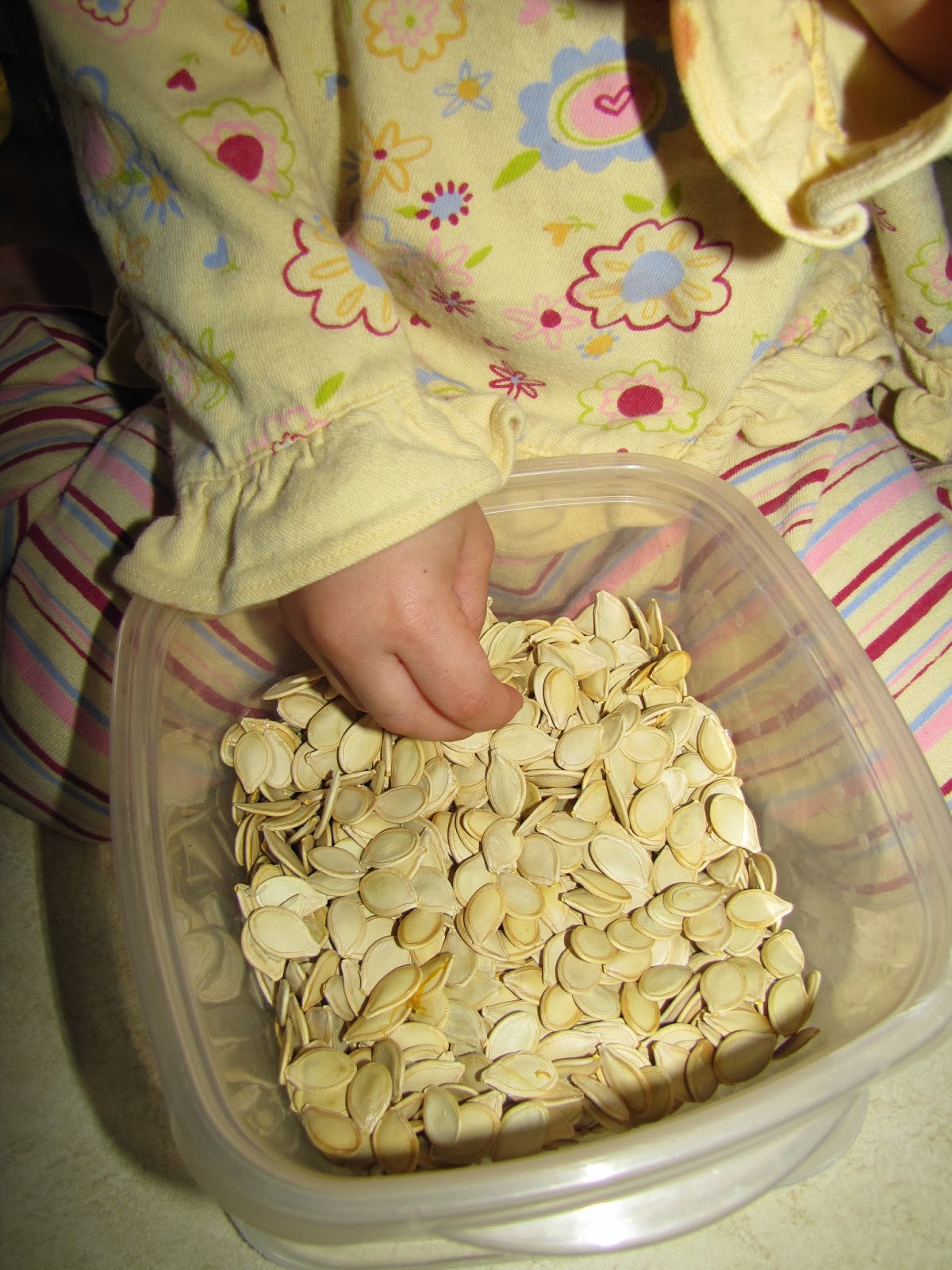 |
| These goodies never last long around here! |
So stop decorating with those delicious pumpkins, gourds and squash, and start eating and preserving them. Winter is just around the corner!
-Jessica
Wednesday, September 11, 2013
Preserving Apples
It's that time of year again! Pretty soon beautiful bushels of fresh, locally-grown apples will start filling every corner of my house, just waiting to be preserved.


Apple season is usually extremely busy in our household. I spend approximately two whole weeks in the kitchen washing, peeling, coring, and preserving them because they are some of my family's favorite treats.
Did you know that even the organic apples and pears sold in the grocery store are sprayed with antibiotics? Apples and pears are the only two foods in the United States that are allowed to be full of antibiotics and still display the organic label. This is a huge problem that is being widely debated and the hope is that by 2016 it will no longer be allowed. These antibiotics play a role in gut health and antibiotic resistance, so it is really important that we stop this practice, especially among organic growers.
Since apples and pears are so vulnerable to bacteria and infections that can kill the trees, it is almost impossible to grow them without spraying. There are alternatives, but they are too costly for the average farmer.
Because of this, whenever I get my apples, regardless of the organic-labelling or not, I do a thorough washing in vinegar. Water alone is not enough. The vinegar will kill 98% of bacteria, pesticide residue, and anything else that may be on the peels. Just fill your sink (sanitized with vinegar) with the apples, cover with water, and add two cups of vinegar. Let them soak for about ten minutes (apples obviously want to float, so just make sure that you push them under and mix them around every few minutes), drain the sink, and then rinse them before eating or preserving.


Freezing is a wonderful way to preserve your apples. Most canning books will tell you to treat your apples with a produce protector before freezing to prevent darkening, but I've never done it and haven't had a problem. The frozen apples do discolor a little bit, but since you're usually using the frozen apples for things like pies and cobblers, the discoloration doesn't really matter. My favorite use for frozen apples is in stove-top potpourri. I throw a cup of the apple slices in a pot with some water, cinnamon sticks, whole cloves, and dehydrated mint, and put it on simmer. The smell is amazing and a great alternative to chemical-filled candles and air-fresheners.

Dehydrating apple rings is another great way to preserve apples. If sliced thinly enough they will turn crispy like a chip - a favorite for my children. If the slices are a little thicker they will be somewhat chewy, but still tasty.
The best way to ensure thin slices is to use an apple peeler. When you're done you get nice apple rings that are uniform in size and fit nicely on your dehydrator tray. I usually fill my dehydrator in the morning and by dinner they are ready (every dehydrator is different).
I've made my apple chips both with the peels and without and they are both equally delicious.

I hope you have a wonderful apple preserving season! There is so much you can do with this delicious fruit to ensure that you will enjoy it all through the winter months. If you are interested in recipes for things like apple butter, apple pie filling, or other sugary treats, I've always had good luck with the Ball Blue Book. I like to use tried and true recipes to ensure that what I make will be preserved safely.
Happy (almost) autumn everyone! And remember - an apple a day keeps the doctor away!
-Jessica
Apple season is usually extremely busy in our household. I spend approximately two whole weeks in the kitchen washing, peeling, coring, and preserving them because they are some of my family's favorite treats.
Did you know that even the organic apples and pears sold in the grocery store are sprayed with antibiotics? Apples and pears are the only two foods in the United States that are allowed to be full of antibiotics and still display the organic label. This is a huge problem that is being widely debated and the hope is that by 2016 it will no longer be allowed. These antibiotics play a role in gut health and antibiotic resistance, so it is really important that we stop this practice, especially among organic growers.
Since apples and pears are so vulnerable to bacteria and infections that can kill the trees, it is almost impossible to grow them without spraying. There are alternatives, but they are too costly for the average farmer.
Because of this, whenever I get my apples, regardless of the organic-labelling or not, I do a thorough washing in vinegar. Water alone is not enough. The vinegar will kill 98% of bacteria, pesticide residue, and anything else that may be on the peels. Just fill your sink (sanitized with vinegar) with the apples, cover with water, and add two cups of vinegar. Let them soak for about ten minutes (apples obviously want to float, so just make sure that you push them under and mix them around every few minutes), drain the sink, and then rinse them before eating or preserving.
Here are my essential tools for apple preservation:
Apple Peeler
Apple Corer
Large Stockpot
Large Wooden Spoon
Food Processor*
Canning Supplies (water bath canner, mason jars/lids, tongs)
Juicer
candy thermometer
Dehydrator
Freezer Bags/Containers
*some people prefer to throw their apple in with the peels and then use a food mill when they cook down. I prefer the consistency of the applesauce when I peel them first and then puree with a food processor after they have cooked.
To can my applesauce I use my peeler to peel and core, and then throw the apples into my stockpot with a small amount of filtered water to prevent sticking. Once the apples have cooked down a little and have softened, I run them through the food processor until they are completely pureed. My children prefer a very smooth applesauce and this method seems to work best for obtaining the desired texture. After it is pureed it goes back into the stockpot until it reaches a boil. Then I fill my jars with 1/2 inch headspace and process them for twenty minutes in the water bath.
Toward the end of my preserving marathon I sometimes get lazy and stop peeling apples. I will simply cut the apples using my corer and throw them, peels and all, into the stockpot to cook down (make sure you used the vinegar wash if you're going to do this). When you put the apples into the food processor they will still blend down to a nice puree, but it won't be as smooth as without the peels and you will see little slices of peel in the jars. My kids don't really notice a difference, but I definitely prefer the sauce without the peels. We can go through 2-3 quarts of sauce each week (100+ each year), so when you're canning in those quantities you sometimes have to cut corners to get it all done!
Apple Juice is another favorite of mine. When I get to the end of my canning session it's a really easy way to use up apples and preserve them. I just throw my halved apples straight into our juicer (we have the Jack LaLanne) and then heat the juice that comes out to 190 degrees (I use a candy thermometer to check). You are not supposed to boil the juice. Once it reaches the temperature I ladle it into my jars with 1/4 inch headspace and process for ten minutes in the water bath.
If you don't have a juicer you can do it the old-fashioned way - throw your chopped apples into the stockpot with water (1 quart filtered water per 12 pounds apples) and once they have cooked down you can strain them through something like cheesecloth to get the juice.
Freezing is a wonderful way to preserve your apples. Most canning books will tell you to treat your apples with a produce protector before freezing to prevent darkening, but I've never done it and haven't had a problem. The frozen apples do discolor a little bit, but since you're usually using the frozen apples for things like pies and cobblers, the discoloration doesn't really matter. My favorite use for frozen apples is in stove-top potpourri. I throw a cup of the apple slices in a pot with some water, cinnamon sticks, whole cloves, and dehydrated mint, and put it on simmer. The smell is amazing and a great alternative to chemical-filled candles and air-fresheners.
Dehydrating apple rings is another great way to preserve apples. If sliced thinly enough they will turn crispy like a chip - a favorite for my children. If the slices are a little thicker they will be somewhat chewy, but still tasty.
The best way to ensure thin slices is to use an apple peeler. When you're done you get nice apple rings that are uniform in size and fit nicely on your dehydrator tray. I usually fill my dehydrator in the morning and by dinner they are ready (every dehydrator is different).
I've made my apple chips both with the peels and without and they are both equally delicious.
I hope you have a wonderful apple preserving season! There is so much you can do with this delicious fruit to ensure that you will enjoy it all through the winter months. If you are interested in recipes for things like apple butter, apple pie filling, or other sugary treats, I've always had good luck with the Ball Blue Book. I like to use tried and true recipes to ensure that what I make will be preserved safely.
Happy (almost) autumn everyone! And remember - an apple a day keeps the doctor away!
-Jessica
Friday, August 23, 2013
Making and Preserving Homemade Chicken Broth
Note: People often use the terms stock and broth interchangeably. Essentially, they are the same thing - water flavored with bones, meat, and vegetables. The main difference is that broth is seasoned and stock is not. I like to flavor before preserving, therefore what I make is a broth, but if you were to leave out the flavoring, you could have a bland stock to season as needed with your recipes.
As I am reaching the height of my canning season, I am working on a series of posts about food preservation. I think the best place to start is with homemade stock.
Do you ever wonder what to do with the carcass after you roast a whole chicken? Making a bone stock or broth out of it is easy and saves you a ton of money. Throughout history bone broths have been known to have healing effects: mitigating cold symptoms, helping with inflammation, relieving digestive issues, and just giving us a sense of comfort when we're under the weather.
The most common brands of broth, like Swanson, are misleading in their advertising. Many brands contain MSG, a neurotoxin, so Swanson wants us to know theirs is healthier and makes sure to label it as "all-natural" and "MSG-free". The problem is that Swanson chicken broth contains yeast extract, which means the broth does in fact contain MSG. It's a labeling trick that is dishonest. To learn more about MSG and yeast extract, read this.
Buying a good, organic bone broth in the grocery store is difficult, not only because they are often seasoned with items you don't want, but they are pretty expensive. Take Pacific Foods Free Range Organic Chicken Broth, which contains organic chicken broth (filtered water, organic chicken), organic chicken flavor, (organic chicken flavor, sea salt), natural chicken flavor (chicken stock, salt), organic evaporated cane juice, organic onion powder, turmeric, and organic flavor. I don't know about you, but I have no idea what "organic flavor" is and I prefer that there isn't hidden sugar in my broth. Besides, for $4.00 per 32 ounces, I would at least like to see some veggies in the broth.
Instead of spending so much on nutritionally inferior broth, why not make your own out of something that costs you nothing extra, as you intend to throw the carcass in the garbage anyways?
All the equipment you need to make your own broth is a large stock pot, something to strain it with (like cheesecloth), and eight quart-size canning jars/lids. I use my Cuisinart 12 Quart Pasta Pot because it allows me to throw all of my ingredients in the pasta insert and once the broth is done simmering I can pull the solids out without having to strain the broth through anything.
 If you don't have a pasta insert, just throw your carcass, veggies, herbs, and seasonings straight into your stockpot and strain it when it is done.
Remember not to use a stock pot coated with Teflon or other non-stick coatings and additives. It makes little sense to worry about your food additives while cooking with pots that contain carcinogens.
MAKING THE BROTH
I do not add herbs now, because I prefer to add them directly to whatever food I am using the broth as a base for, but you could add some now if you want to - bay leaves or rosemary would be nice.
Bring the water to a boil and then let it simmer on the stove for about four hours. If you have your solids directly in a stock pot you're going to want to stir it every now and then to make sure the veggies aren't sticking to the bottom. If you're using the pasta insert it is not necessary.
After four hours you have a delicious broth that you can either preserve by freezing or canning, or put directly in the fridge, where it will last for about one week. Freezing is a great option if you have the space for it, however, I prefer canning my broth so I don't waste precious space in my deep-freezer.
CANNING THE BROTH
To preserve your broth you are going to need a pressure canner. I have a Presto 16 Quart canner and it is easy to use, although quite intimidating the first time. If you've never used a pressure canner you may want to invite someone over to help you initially, as it is very different than using a water bath canner.
My canner fits 7 quart-size jars, and since I prepare 8 quarts of broth at once (1 inch of headspace), I leave one in the fridge for immediate use. The rest go into the canner for 25 minutes at 10 psi.

And there you have it - 8 quarts of delicious homemade broth to use as a base in your soups and other meals. Not only is it nutritionally superior to what you can buy in the store, but it saves you about $32 if you were buying the same quantity of organic broth there.
In case you're wondering, you CANNOT preserve broth with a water bath canner. It is a low-acid food, which needs to reach 240 degrees for a specific period of time in order to kill the bacteria that would spoil it. A water bath canner cannot reach that temperature.
-Jessica
As I am reaching the height of my canning season, I am working on a series of posts about food preservation. I think the best place to start is with homemade stock.
Do you ever wonder what to do with the carcass after you roast a whole chicken? Making a bone stock or broth out of it is easy and saves you a ton of money. Throughout history bone broths have been known to have healing effects: mitigating cold symptoms, helping with inflammation, relieving digestive issues, and just giving us a sense of comfort when we're under the weather.
The most common brands of broth, like Swanson, are misleading in their advertising. Many brands contain MSG, a neurotoxin, so Swanson wants us to know theirs is healthier and makes sure to label it as "all-natural" and "MSG-free". The problem is that Swanson chicken broth contains yeast extract, which means the broth does in fact contain MSG. It's a labeling trick that is dishonest. To learn more about MSG and yeast extract, read this.
Buying a good, organic bone broth in the grocery store is difficult, not only because they are often seasoned with items you don't want, but they are pretty expensive. Take Pacific Foods Free Range Organic Chicken Broth, which contains organic chicken broth (filtered water, organic chicken), organic chicken flavor, (organic chicken flavor, sea salt), natural chicken flavor (chicken stock, salt), organic evaporated cane juice, organic onion powder, turmeric, and organic flavor. I don't know about you, but I have no idea what "organic flavor" is and I prefer that there isn't hidden sugar in my broth. Besides, for $4.00 per 32 ounces, I would at least like to see some veggies in the broth.
Instead of spending so much on nutritionally inferior broth, why not make your own out of something that costs you nothing extra, as you intend to throw the carcass in the garbage anyways?
All the equipment you need to make your own broth is a large stock pot, something to strain it with (like cheesecloth), and eight quart-size canning jars/lids. I use my Cuisinart 12 Quart Pasta Pot because it allows me to throw all of my ingredients in the pasta insert and once the broth is done simmering I can pull the solids out without having to strain the broth through anything.

Remember not to use a stock pot coated with Teflon or other non-stick coatings and additives. It makes little sense to worry about your food additives while cooking with pots that contain carcinogens.
MAKING THE BROTH
8 quarts filtered water
1 organic, free-range chicken carcass
3-4 organic carrots
3 organic green onions
2 cloves organic garlic
10-15 whole peppercorns
2 T sea salt
I do not add herbs now, because I prefer to add them directly to whatever food I am using the broth as a base for, but you could add some now if you want to - bay leaves or rosemary would be nice.
Bring the water to a boil and then let it simmer on the stove for about four hours. If you have your solids directly in a stock pot you're going to want to stir it every now and then to make sure the veggies aren't sticking to the bottom. If you're using the pasta insert it is not necessary.
After four hours you have a delicious broth that you can either preserve by freezing or canning, or put directly in the fridge, where it will last for about one week. Freezing is a great option if you have the space for it, however, I prefer canning my broth so I don't waste precious space in my deep-freezer.
CANNING THE BROTH
To preserve your broth you are going to need a pressure canner. I have a Presto 16 Quart canner and it is easy to use, although quite intimidating the first time. If you've never used a pressure canner you may want to invite someone over to help you initially, as it is very different than using a water bath canner.
My canner fits 7 quart-size jars, and since I prepare 8 quarts of broth at once (1 inch of headspace), I leave one in the fridge for immediate use. The rest go into the canner for 25 minutes at 10 psi.

And there you have it - 8 quarts of delicious homemade broth to use as a base in your soups and other meals. Not only is it nutritionally superior to what you can buy in the store, but it saves you about $32 if you were buying the same quantity of organic broth there.
In case you're wondering, you CANNOT preserve broth with a water bath canner. It is a low-acid food, which needs to reach 240 degrees for a specific period of time in order to kill the bacteria that would spoil it. A water bath canner cannot reach that temperature.
-Jessica
Subscribe to:
Posts (Atom)