Saturday, July 3, 2010
How To Make Raw Almond Milk
Friday, April 30, 2010
Homemade Soaked Granola Bars
Let's look at Nature Valley's 100% Natural Chewy Trail Mix - Fruit & Nut bars.
Ingredients: whole grain oats, high maltose corn syrup, rice flour, raisins, almonds, honey, sugar, roasted peanuts, fructose, sunflower seeds, canola oil, cranberries, maltodextrin, soy lecithin, salt, malt extract, baking soda, natural flavor, and mixed tocopherols.That's EIGHT different sugars in one little granola bar. Yikes!
What about something that is considered a little more healthy - Kashi's TLC Chewy Granola Bars Honey Almond Flax?
Ingredients: rolled grain blend (hard red wheat, oats, rye, triticale, barley), roasted salted whole almonds, brown rice syrup, soy protein isolate, soy grits, evaporated cane juice crystals, chicory root fiber, whole flax seeds, evaporated cane juice syrup, rice starch, corn flour, honey, expeller pressed canola oil, vegetable glycerin, oat fiber, natural flavors, evaporated salt, Kashi seven whole grains sesame flour (whole: oats, hard red wheat, rye, brown rice, triticale, barley, buckwheat, sesame seeds), molasses, soy lecithin, peanut flour, whey protein isolate.
Only FIVE sugars in this one.
But the sugars aren't the only unhealthy thing about these "healthy" snacks. They both use genetically modified ingredients, canola oil (at least Kashi's is expeller pressed), and those mysterious "natural flavors" that could include just about anything.
Your best bet is to make your own granola bars. I found a wonderful recipe here that I decided to modify using soaked grains and nuts. Remember that it is always important to soak your grains, nuts, legumes and beans before consuming them!
Here is how I made my chewy granola bars. To make my recipe you will need a dehydrator. I will also warn you that I didn't measure anything - you can't really mess this up, so just use as much as you want of each ingredient.
Step 1: Soak some organic oats, raw almonds, and raw sunflower seeds for 12-24 hours. The longer you soak, the better.
Step 2: Drain and rinse your ingredients and then dehydrate them for a while. I did it until the oats were half dry.
Step 3: Pulse your almonds in the food processor.
Step 4: Toss your oats, almonds, and seeds into a large mixing bowl. Add your dried fruit - I used raisins and chopped dried figs. Add your sweetener - I used raw, local honey.
Add your fat - I used coconut oil so that my dairy-allergic son can eat them, but butter would also taste great. Add anything else you want - I used cinnamon and flax meal.
Step 5: Mix. Skip the spoon and just use your hands - it's much easier.
Step 6: Put some wax paper on a flat surface and plop your ingredients on top.
Step 7: Put another piece of wax paper over your ingredients and roll them until they are the desired thickness. I like mine thicker. Just remember that the thicker they are, the longer they will take to dehydrate.
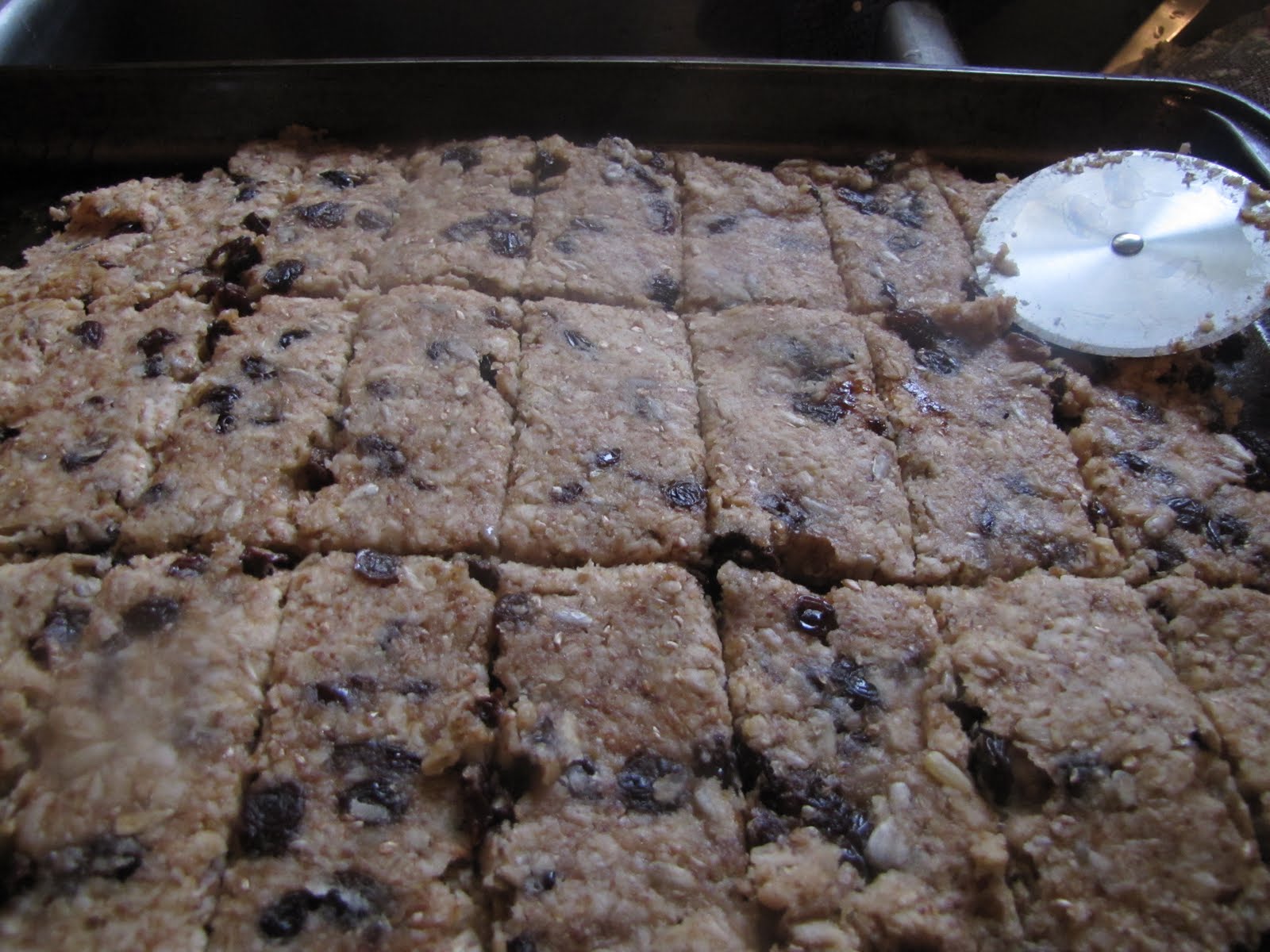
Step 8: Peel off your top layer of paper and cut your bars with a pizza cutter.
Step 9: Transfer your bars to the dehydrator and turn it on until they dry. It took my really thick bars about 6 hours to completely dry today.
Step 10: Enjoy!
Here is a picture of one of the thin ones for the children and the big, thick, Mommy-sized bars :)
It's as easy as that - a fresh, healthy snack for your family without all of the nasty additives, preservatives and sugars.
-Jess
Monday, April 19, 2010
The Whole Soy Story
I also was a vegetarian for nearly ten years prior to this diagnosis. I lived off of tofu burgers and veggies shreds. As soon as I learned that the soy was making me sick, I had to completely change my lifestyle and begin eating meat again.
A few months prior to my diagnosis, it was also discovered that my older son, Gabriel, had a soy allergy. His first bottle of soy-based formula caused a severe allergic reaction.
I just wanted to highlight some of the interesting things I learned while reading the book:
The study that really made soy a healthy food in America showed that the Japanese (who eat 30 times the soy we eat) have lower rates of breast, uterine and prostate cancer. What the media coverage of this study failed to also tell us is that the Japanese have higher rates of esophageal, stomach, pancreatic and liver cancers. Asians also do not eat soy in the ways we eat it. They leave the soybean intact in fermented products like miso, tempeh and natto.
The FDA approves soy protein as a heart healthy food but it is also found on their "Poisonous Plant Database."
Soybean oil is a mosquito repellant. It actually kills the mosquito, which makes you wonder what it does to your insides.
People who eat ground meat with textured soy protein extenders (this is what is served to our children in school) lose 61% (at a 3:1 ratio) and 53% (at a 2:1 ratio) of their ability to absorb the iron from the meat.
Here are all of the toxins and antinutrients that soy contains:
The scariest information to read was about soy-based formula:
- allergens
- goitrogens - cause thyroid damage
- lectins - cause immune system reactions and play a role in allergic reactions because they destroy intestinal mucosa.
- oligosaccharides - cause bloating and gas
- oxalates - prevent the absorption of calcium and linked to kidney stones
- phytates - leads to poor growth and anemia. Levels are higher in soy than in any other food.
- isoflavones - cause reproductive damage
- protease inhibitors - cause gastric distress, poor protein digestion, cancer, and damage to the pancreas. Many foods contain them (grains, nuts, seeds, some veggies, etc.), but cooking deactivates them. They are at higher levels in soybeans (and even higher in GM beans) and are more resistant to neutralization through cooking.
- The isoflavones in the formula effect hormones and can cause developmental problems in the reproductive system. They also put children at an increased risk of thyroid problems (hypothyroidism and autoimmune thyroid disease).
- Infants fed soy formula also produce more gas (CH4 and H2S), which has been linked to intestinal disorders, such as ulcerative colitis and Crohn's Disease.
- Scientists have suggested expensive techniques that would neutralize the phytates in formula, but the industry prefers to go the cheaper route and enrich the formula with zinc, iron and calcium to compensate. They are required by law to do this.
- Iron absorption from soy formula is 27%. It is 65% in breast milk, 60% in whey formula and 46% in casein formula.
Something I learned from the author's website - "The Israeli Health Ministry has issued a health advisory warning that infants should not use soy formula. So have the British Dietetic Association, the New Zealand Health Ministry, and the Swiss Federal Health Service."
Soy lectin may contribute to Type 1 Juvenile Onset Diabetes because it destroys pancreatic cells that secrete insulin.
Asian monks used to eat high levels of soy because it was known to lower their libido.I have also read before that animals that are fed diets high in soy fail to thrive and show signs of malnutrition. They also have a shorter lifespan and produce less offspring.
When I put all of this information together, it's a no-brainer for me. It's yet another reason to make sure the food I am feeding my family isn't processed and is prepared properly (soaked, cooked properly, etc.). Since cutting out soy from my diet, I have not had a major flare-up of my Crohn's Disease and have been able to stay off of toxic drugs like Prednisone. I think I now know why!
If you are interested in learning more about soybeans, I suggest reading this book!
-Jessica
I was not contacted by anyone to review this book. I just enjoyed it and wanted to share some information with my readers.
*Diagnosis made through IgE fecal test.
Friday, March 19, 2010
How To Make Homemade Sourdough Bread
What are the advantages of sourdough bread?
- Sourdough bread is easier to digest because of the lactic acid created in the fermentation process.
- The soaking that is a part of making sourdough bread decreases phytate content, which allows for better nutrient absorption.
- It causes a lower spike in blood sugar than any other type of bread.
- It does not spoil as easily as bread made from brewers yeast because its acetic acid retards mold growth.
- It tastes DELICIOUS!
Your first step is to make a sourdough starter.
My recipe came from Nourishing Traditions. It yields 3 quarts of starter.
I took 2 cups of rye flour and 2 cups of filtered water and mixed them together in a large bowl. Then, I covered the soupy mixture with a double layer of cheesecloth and secured it with a rubber band.
You can see my bowl in this picture (note that my kitchen counters have become a "laboratory" for soaking and sprouting).
For the next 7 days, I transferred my soupy mixture to a different bowl each day and added one cup of rye flour and another cup of filtered water. I would then mix it and put the cheesecloth back on top.
During the week, the cheesecloth allowed good bacteria (lactobacilli) and airborne fungus (wild yeast) to enter my soupy mix, causing it to froth and bubble. After about 3 days it began to smell badly, but by the end of the week it smelled like wine.
This is what it looked like after 7 days.
At this point, it was ready to be used for making bread.
A sourdough starter is a living thing that needs to be cared for just like any other living thing. If you aren't going to use it right away, you can store it in the fridge or freezer. Just make sure that you "feed" the starter with one cup of flour/water at least once a week and allow oxygen to get to it.
Starters make a wonderful gift for friends and family - just give them a few cups and tell them to feed it every day until they build up their supply.
The taste of your starter and it's ability to leaven bread will get better with age, so be patient and don't give up if your first batch of bread doesn't taste perfect!
Note: many websites will tell you that you shouldn't use metal bowls or utensils for your starter. I used a stainless steel bowl for mine and did not have a problem. Everything I've read says that anything other than stainless steel is not advised, but essentially the "no metal rule" is a myth.
Now you are ready to make your bread.
Once again, I used the Nourishing Traditions recipe.
I used 2 quarts of my starter (needs to be at room temperature) and added 2 1/2 tablespoons of sea salt and 1 cup cold filtered water.
Mix it until the salt dissolves. Then, start mixing your flour (you will add 13 cups in all). I used whole wheat.
Halfway through you will need to add another 1/2 cup cold filtered water and start mixing with your hands.
Then, knead the dough for about 15 minutes. This will be a workout, BELIEVE me! My arms were sore afterwards.
Section your dough into your loaf sizes. I made five medium-sized loafs.
Grease your loaf pans. I used coconut oil because of Gabe's dairy allergy.
Form your loaves and put them in their pans.
Make sure to add some slices to the tops of your loaves.
Then cover your loaves and let them rise.
Leavening time will depend on the age and quality of your starter - the older the starter, the shorter the time. Some starters may take as little as a few hours, but other may take a day or longer. Remember that your dough will not spoil, because the fermentation process protects it.
I let mine rise for 19 hours and this is what they looked like afterwards.
Bake at 350 for an hour and your bread is done!
I sliced several of my loaves and froze them. This will make it easy to grab a few pieces as needed for toast.
Enjoy!
-Jess
Thursday, July 2, 2009
Hemp Milk
Here is a chart I made comparing the amount of fat and protein (in grams), as well as the % RDA of calcium in 8 ounces of each type of milk:

As you can see, the nutritionist was correct - rice milk and almond milk do not compare to any of the other alternatives in terms of fat and protein. Even soy milk falls short in fat. But what surprised me most were the levels in hemp milk, an alternative I had never heard of before.
After doing a little more research about hemp milk I discovered that it is not only high in fat and protein, and contains half of your daily calcium, it also is:
- high in omega 3/omega 6
- contains no cholesterol
- a complete protein, containing all of the essential amino acids
- contains potassium, phosphorus, riboflavin, Vitamin A, Vitamin E, Vitamin B12, Folic Acid, Vitamin D, Magnesium, Iron, Zinc, and more (sounds better than my prenatal vitamin!)
And don't worry, it does not contain THC.
Hemp milk just became popular a few years ago and is growing as an alternative to dairy, soy, and almond products for people with allergies and intolerances.
I also discovered that rice milk and soy milk can contain phytates (which block the absorption of certain nutrients) and oligosaccharides (which cause gas and stomach problems). Hemp milk does not.
So we switched Gabe over to hemp milk several days ago and he seems to be enjoying it. We are still adding probiotic powder to his breakfast drink and a liquid calcium supplement to his dinner cup to compensate for what it is lacking.
The only brand that we found in our local grocery store was HEMP Dream, made by the same company that makes Gabe's rice milk. It was costly (nearly $6 for 32 ounces) and doesn't contain the same amount of calcium as other brands, so I don't know if we will stick with it.
I have heard good things about the taste of Living Harvest Hemp Milk, which can be ordered here for a very reasonable price. But, the nutritional label shows that it only has half of the protein of other brands.
Manitoba Harvest offers several varieties that are cheaper than HEMP Dream, but also do not contain the optimal amount of calcium.
We are still shopping around to find the right product for Gabe, but are thrilled to know that there is an alternative out there that can give him everything that cow's milk can!
-Jessica
Source:
"The Benefits of Organic Hemp Milk Natural Health & Organic Living Blog." 02 July 2009
Friday, June 19, 2009
Soak Your Oats!
All you need to do to maximize the health benefits of your oats is soak them in warm water with an acid base during the night and they will be ready to eat in the morning. You will find that soaking them makes them cook almost as quickly as instant oats. Suggested acid bases are - whey, yogurt or other fermented dairy products, or if you're allergic or intolerant to dairy you can use lemon juice or vinegar. Add 1-2 tablespoons to your bowl of water and oats.
The same should be done for all grains, nuts, legumes and beans to maximize vitamin and mineral absorption.
I have to admit that I am really bad about doing this, because it requires planning ahead, and that isn't one of my strengths. But it is so important to do, as studies are showing that the buildup of phytic acid is causing vitamin deficiencies in many people. Remember that most of the processed foods on the grocery store shelf that contain grains, nuts, beans and legumes are not soaked!
-Jessica
Source:
Fallon, Sally. Nourishing traditions the cookbook that challenges politically correct nutrition and the diet dictocrats. Washington, DC: NewTrends Pub., 1999.