Saturday, July 3, 2010
How To Make Raw Almond Milk
Friday, April 30, 2010
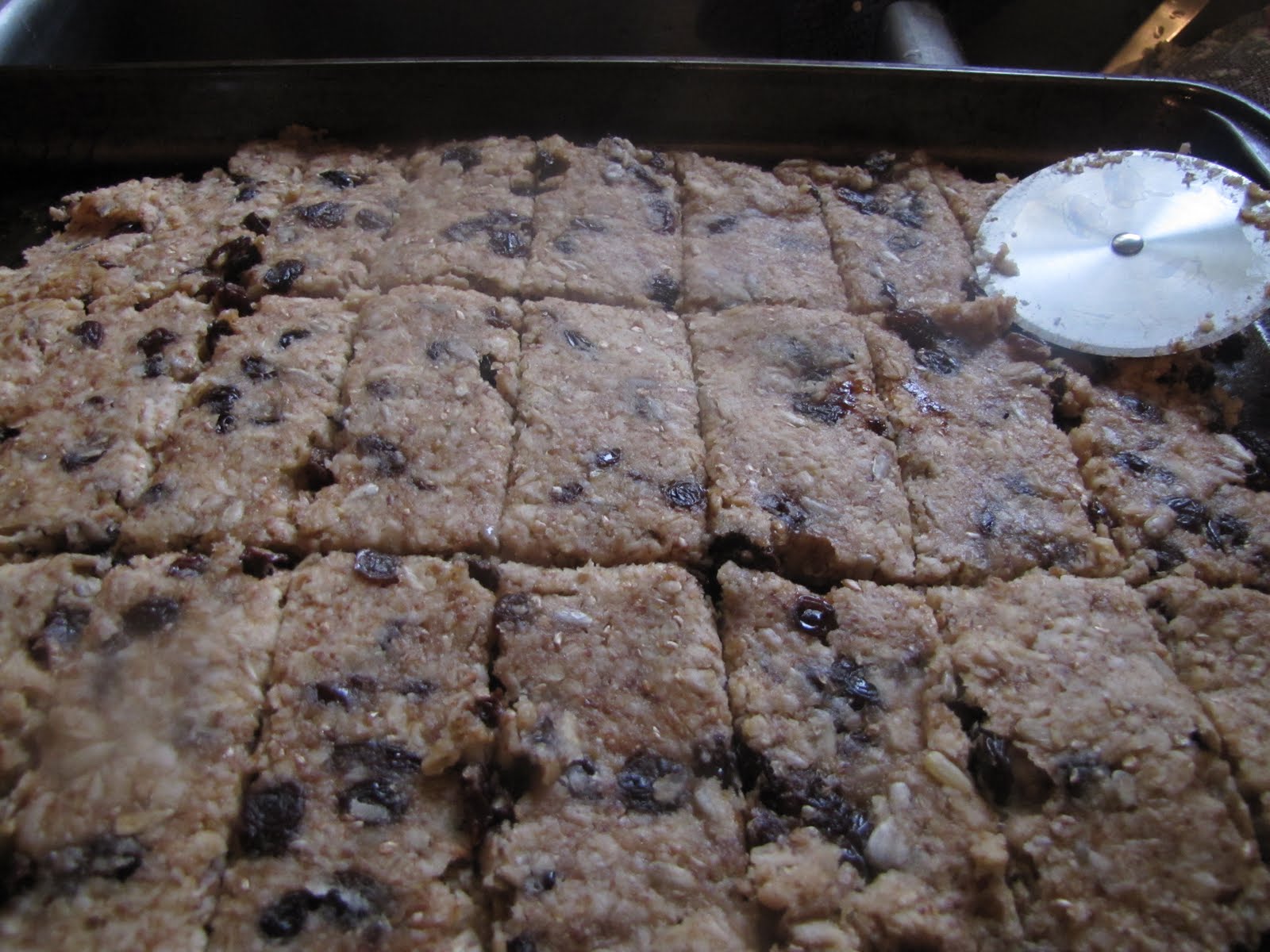
Homemade Soaked Granola Bars
Let's look at Nature Valley's 100% Natural Chewy Trail Mix - Fruit & Nut bars.
Ingredients: whole grain oats, high maltose corn syrup, rice flour, raisins, almonds, honey, sugar, roasted peanuts, fructose, sunflower seeds, canola oil, cranberries, maltodextrin, soy lecithin, salt, malt extract, baking soda, natural flavor, and mixed tocopherols.That's EIGHT different sugars in one little granola bar. Yikes!
What about something that is considered a little more healthy - Kashi's TLC Chewy Granola Bars Honey Almond Flax?
Ingredients: rolled grain blend (hard red wheat, oats, rye, triticale, barley), roasted salted whole almonds, brown rice syrup, soy protein isolate, soy grits, evaporated cane juice crystals, chicory root fiber, whole flax seeds, evaporated cane juice syrup, rice starch, corn flour, honey, expeller pressed canola oil, vegetable glycerin, oat fiber, natural flavors, evaporated salt, Kashi seven whole grains sesame flour (whole: oats, hard red wheat, rye, brown rice, triticale, barley, buckwheat, sesame seeds), molasses, soy lecithin, peanut flour, whey protein isolate.
Only FIVE sugars in this one.
But the sugars aren't the only unhealthy thing about these "healthy" snacks. They both use genetically modified ingredients, canola oil (at least Kashi's is expeller pressed), and those mysterious "natural flavors" that could include just about anything.
Your best bet is to make your own granola bars. I found a wonderful recipe here that I decided to modify using soaked grains and nuts. Remember that it is always important to soak your grains, nuts, legumes and beans before consuming them!
Here is how I made my chewy granola bars. To make my recipe you will need a dehydrator. I will also warn you that I didn't measure anything - you can't really mess this up, so just use as much as you want of each ingredient.
Step 1: Soak some organic oats, raw almonds, and raw sunflower seeds for 12-24 hours. The longer you soak, the better.
Step 2: Drain and rinse your ingredients and then dehydrate them for a while. I did it until the oats were half dry.
Step 3: Pulse your almonds in the food processor.
Step 4: Toss your oats, almonds, and seeds into a large mixing bowl. Add your dried fruit - I used raisins and chopped dried figs. Add your sweetener - I used raw, local honey.
Add your fat - I used coconut oil so that my dairy-allergic son can eat them, but butter would also taste great. Add anything else you want - I used cinnamon and flax meal.
Step 5: Mix. Skip the spoon and just use your hands - it's much easier.
Step 6: Put some wax paper on a flat surface and plop your ingredients on top.
Step 7: Put another piece of wax paper over your ingredients and roll them until they are the desired thickness. I like mine thicker. Just remember that the thicker they are, the longer they will take to dehydrate.
Step 8: Peel off your top layer of paper and cut your bars with a pizza cutter.
Step 9: Transfer your bars to the dehydrator and turn it on until they dry. It took my really thick bars about 6 hours to completely dry today.
Step 10: Enjoy!
Here is a picture of one of the thin ones for the children and the big, thick, Mommy-sized bars :)
It's as easy as that - a fresh, healthy snack for your family without all of the nasty additives, preservatives and sugars.
-Jess
Saturday, October 24, 2009
Oil Extraction Techniques
The cheapest and most common method for extracting oils involves heating the seed to an extremely high temperature and crushing it, thus causing exposure to even more heat through friction. Any oils not obtained through the pressure are treated with a hexane solvent, some of which remains on the oil even after it is washed away.
The high heat from this process creates free radicals and destroys the antioxidants that normally protect us from them. And although hexane levels are generally low in the oils, hexane poisoning can cause muscular and vision problems.
Another extraction process is called expeller-expression. In this technique the seeds are drilled and exposed to lower temperatures. Some expeller-pressed oils are still treated with hexane. This is why it is important to make sure your oils are organic.
Cold-pressed oils are those that have not been exposed to high temperatures, but there is little regulation in the United States as to what defines a high temperature. Some expeller-pressed oils are not considered cold-pressed.
Why does it matter how the oils are extracted?
As I mentioned before, organic expeller-pressed oils are not treated with chemicals, additives or preservatives. But these oils are also healthier because if stored correctly they are not rancid like oils made from other extraction processes. Most oils turn sour when they are exposed to too much heat, light or oxygen. So, the bottles of oil on the grocery store shelf are usually rancid before you even open them, making them full of free radicals and bad for your intestinal health. The oils generally don't smell sour because they go through a deodorizing process.
Tip: Always remember to store your expeller-pressed oils in a dark container in the fridge so you limit their exposure to light and heat.
To see a chart of oils from best to worst for you, click here.
-Jessica
Source:
Fallon, Sally. Nourishing traditions the cookbook that challenges politically correct nutrition and the diet dictocrats. Washington, DC: NewTrends Pub., 1999.
Monday, September 28, 2009
My Superfoods
I have been on a prenatal vitamin for nearly three years now, but am unable to take most prescription strength types because they contain either soy or a stool softener that can upset my Crohn's Disease. I have found a few OTC vitamins that seemed to work well in the past, but lately they have been upsetting my stomach.
Because of this, I decided to start researching what exactly these vitamins contain. I discovered that most of the brands you find on the store shelves are synthetic - vitamins created in a laboratory from coal tar derivatives, which are not absorbed by your body in the same way as vitamins from natural plants and other materials. Even when the vitamins say they are coming from natural sources, we don't know exactly what that means. For example - Vitamin E often comes from soybean oil (most likely genetically modified at that).
So, I've made a decision to stop taking vitamins and to focus more on getting my vitamins from the food I eat. This decision lead me to NutritionData, a website that allows you to search for foods that contain high levels of certain vitamins and minerals. From the lists they provided, I weeded out the processed and enriched foods to find the raw foods containing the highest levels.
While looking at the lists I created, I noticed that many of the same foods were appearing over and over again. Organ meat (especially liver) was found on 46% of the lists. Leafy greens (especially spinach) and wheat germ were on 36%, while sunflower seeds and mollusks were on 32%. Squash and pumpkin seeds were on 27% and the following foods were on 18% of the lists - rice bran, wild game meat, eggs, lentils, and nuts.
So I am now considering these foods my "superfoods" and am going to make an effort to include them in my diet as much as possible. I've always known that I need to eat these foods, but never really knew why until now.
Here are the specific lists:
Foods high in Vitamin A -Leafy greens, Carrots, animal liver, Broccoli, Asparagus, Cabbage, prunes, Okra, Leeks, Kiwi. Full list found here.
Foods high in Vitamin B6 - hot peppers, Paprika, Summer squash/zucchini, Watercress, Bell peppers, Turnip greens, Bamboo shoots, Spinach, Okra, Garlic. Full list found here.
Foods high in vitamin B12- Mollusks, Animal liver, Crustaceans, Animal heart, Fish, Wild game meat, Eggs, Milk, Beef, Poultry. Full list found here.
Foods high in Vitamin C - Bell peppers, guavas, Currants, Hot peppers, Orange peel/oranges, leafy greens, Broccoli, Kohlrabi, Papaya, lemons. Full list found here.
Foods high in Vitamin D - Cod liver oil, Fish, Oysters, Eggs, Cheese, Milk, Mushrooms, Clams. Full list found here.
Foods high in Vitamin E - Wheat germ oil, Hazelnut oil, Almond oil, Sunflower seeds, Paprika, cayenne pepper, chili powder, grapeseed oil, Almonds, Flaxseed oil. Full list found here.
Foods high in Vitamin K - Kale, Swiss chard, Dandelion greens, Collard greens. Full list found here.
Foods high in folate - Yeast, Animal liver, Beans (mothbeans, chickpeas, cowpeas, mung beans, etc.), lentils, Giblets, Wheat germ, Peanuts, Sunflower seeds, Spinach. Full list found here.
Foods high in calcium - Whey, Milk, Cheese, Seaweed, agave, Grape leaves, Flaxseed, Leafy greens. Full list found here.
Foods high in iron - Whale/seal/walrus meat, Animal spleen, Animal liver, Seaweed, Clams, Yeast, Pumpkin/squash seeds, Sesame seeds, Bell peppers. Full list found here.
Foods high in magnesium - rice bran, Seaweed, Wheat bran, Pumpkin/squash seeds, Flaxseed, Brazilnuts, Sesame seeds, Beans (yardlong, cowpeas, hyacinth, etc.), Sunflower seeds. Full list found here.
Foods high in zinc - Oysters, Wheat germ, Agave, Animal liver, Pumpkin and squash seeds, Beef, Wild game meat (bear, caribou, bison, elk), Lamb, whale. Full list found here.
Foods high in potassium - Palm hearts, Beans (white, lima, black, etc.), Molasses, Wheat bran, Nuts (pistachio, ginkgo, chestnuts, etc.), Lentils, Arrowhead, Wheat germ, Sunflower seeds. Full list found here.
Foods high in phosphorus - Rice bran, Smelt, Seeds (pumpkin, squash, sunflower, etc.), Wheat bran, wheat germ, Cheese (Parmesan, goat, gruyere, swiss, etc.), Cashews, Oats, Walnuts, durum wheat. Full list found here.
Foods high in copper - Animal liver, Oysters, Seaweed, Dried shiitake mushrooms, Sesame seeds, Nuts (cashews, brazilnuts, walnuts, etc.), Lobster, Sunflower seeds, Lentils. Full list found here.
Foods high in manganese - Rice bran, Wheat germ, Nuts (hazelnuts, pine nuts, etc.), Oats, Mussels, Maple syrup, Bulgur, Spelt, Grape leaves. Full list found here.
Foods high in selenium - Nuts, Mollusks, Animal kidneys, Animal giblets, Durum wheat, Sunflower seeds, Wheat germ, Kamut, Animal liver, Fish . Full list found here.
Foods high in choline - Egg, Organ meat, Whey, Beef, Game meat, Pork, Veal, Animal fat, Milk, Beef stock/broth. Full list found here.
Foods high in beta carotene - Grape leaves, Carrots, sweet potatoes, Leafy greens, pumpkin, Squash, Cabbage, Plums, Peas, apricots. Full list found here.
Foods high in lycopene - Tomatoes, Watermelon, Grapefruit, Asparagus, Red cabbage, Carrots, Chicken liver. Full list found here.
Foods high in Betaine - Quinoa, Spinach, Beets, Kamut, Bulgur, Amaranth, Tilapia, Oat bran, Beef, Game meat. Full list found here.
Foods high in Pantothenic Acid - Rice bran, Organ meat, Whey, Egg, Shiitake mushrooms, Wheat germ, Lentils, Peanuts, Cheese. Full list found here.
-Jessica
Note - on NutritionData, I used the Nutrient Search Tool and sorted for foods highest in a particular vitamin or mineral based on levels per 100-gram serving.
Friday, June 19, 2009
Soak Your Oats!
All you need to do to maximize the health benefits of your oats is soak them in warm water with an acid base during the night and they will be ready to eat in the morning. You will find that soaking them makes them cook almost as quickly as instant oats. Suggested acid bases are - whey, yogurt or other fermented dairy products, or if you're allergic or intolerant to dairy you can use lemon juice or vinegar. Add 1-2 tablespoons to your bowl of water and oats.
The same should be done for all grains, nuts, legumes and beans to maximize vitamin and mineral absorption.
I have to admit that I am really bad about doing this, because it requires planning ahead, and that isn't one of my strengths. But it is so important to do, as studies are showing that the buildup of phytic acid is causing vitamin deficiencies in many people. Remember that most of the processed foods on the grocery store shelf that contain grains, nuts, beans and legumes are not soaked!
-Jessica
Source:
Fallon, Sally. Nourishing traditions the cookbook that challenges politically correct nutrition and the diet dictocrats. Washington, DC: NewTrends Pub., 1999.